Cat Pregnancy: Signs, Stages, and Care – If you think your cat may be pregnant, congratulations, and hopefully, this will be a special experience for you! Cat pregnancy can be exciting, but it also comes with responsibilities. If you know what to expect, identify signs early, and provide your cat with the best possible care, the whole thing can go smoothly and be less stressful for her and her kittens.
Generally, a cat pregnancy is about 63 to 65 days, though it can range from 58 to 70 days from conception to delivery. That is just over two months, and a lot happens during a short time (usually about a week prior to delivery, you want to have all of your supplies on hand and ready).
Common Early Signs To Recognize Your Cat Might Be Pregnant
Cats don’t really come with a pregnancy announcement, but here are some signs to keep an eye on.
Nipple Changes (Pinking-up) – Her nipples will begin to pink up and become slightly swollen (gravid) about 2-3 weeks in.
Increased Appetite – She will likely be eating more to support her growing kittens.
Morning Sickness – Some cats exhibit mild vomiting in the early weeks of pregnancy.
Weight Gain – By about week 4, her belly will have started to round out.
Behavior Changes – She may be much more affectionate or maybe a bit more reclusive.
No More Heat Cycles – If her usual normal cycle has stopped, this could indicate she is pregnant.
If you are unsure, your vet can confirm with a physical inspection, an ultrasound, or an X-ray.
The Stages Of Cat Pregnancy
Pregnancy in cats is normally broken into 3 stages, and these are –
1. Early Stage (Weeks 1 to 3 )
- Fertilization happens, and tiny embryos start developing.
- She may eat less or seem slightly off, blame those hormonal moves.
- Nipples start to turn pinker.
2. Middle Stage (Weeks 4 to 6 )
- Her tummy gets visibly rounder
- She eats more, so move her to a high-quality kitten food now
- She may start scouting quiet corners to build a nest
3. Final Stage (Weeks 7 to 9 )
- You may feel small kitten movements in her belly.
- Her mammary glands swell and may produce milk.
- She will spend more time in her chosen nesting spot.
- A day or so before labor, her appetite may drop.
Signs Labor Is Near
The birthing process in cats is called queening. Some signs she is about to give birth include –
- Pacing and restlessness
- Often, grooming, specifically of the genital area
- Body temperature dropping below 37.8 °C within 24 hours of labor
- Soft meows or increased need for attention
- Make a quiet, warm, safe area with soft blankets or towels. Once she starts labor, try not to disturb her; she will like privacy.
Caring For Your Pregnant Cat
Pregnancy is hard work, even for cats. Here is how you can help her along –
Feed her well
From week 4 onward, kitten food is best, as it is higher in calories and nutrients. Always keep fresh water nearby.
Keep up with vet visits.
A checkup early in pregnancy ensures she is healthy. Ask your vet about safe flea control or deworming if required.
Reduce stress
Keep her routine steady. If you have other pets, give her a safe space where she can relax.
Gentle activity only
Light activity is good, but avoid rough handling or anything that risks a fall.
Be prepared for emergencies.
Understand the signs of a problem, such as prolonged straining without a kitten, foul-smelling discharge, or extreme distress.
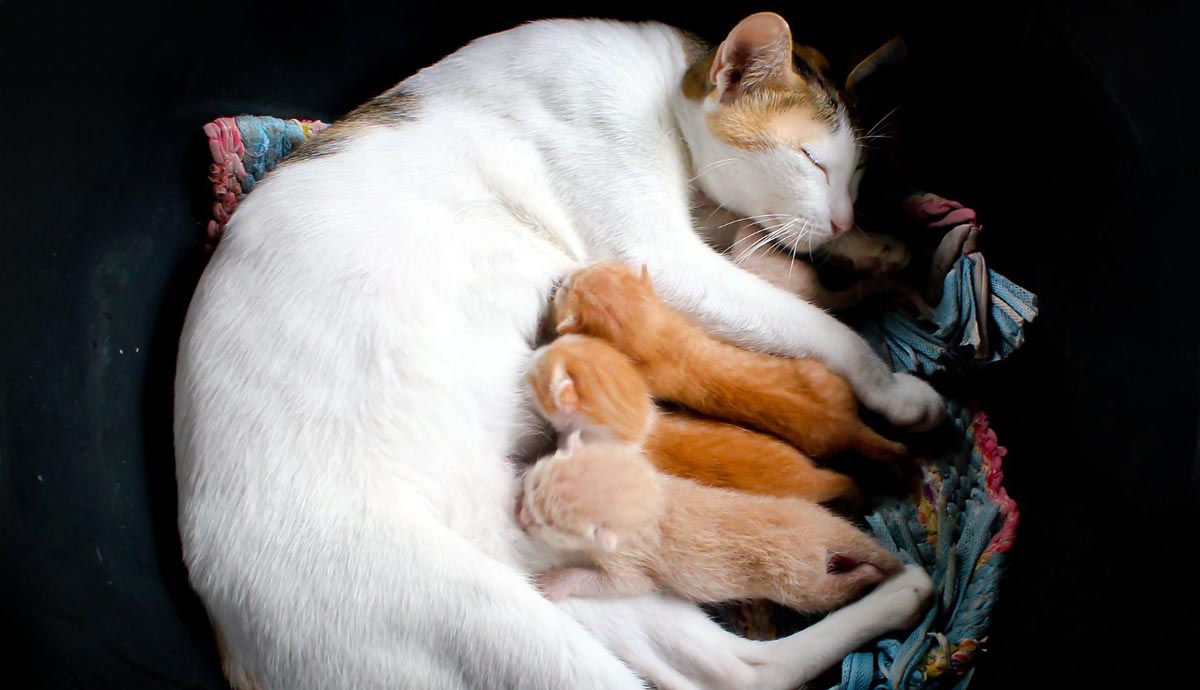
After The Kittens Arrive
Most cats handle birth just fine without help, but you will still want to keep an eye on things.
Let her clean and nurse the kittens, it is essential for bonding and their immunity.
If she is not reacting or appears unwell, get on the phone to your veterinarian right away.
Look for signs of infection, such as fever, odor, and/or swollen mammary glands.
The kittens should start nursing within one hour after delivery, and if they do not, you may have to step in and bottle feed with veterinary assistance.
Potential Complications
While the majority of pregnancies are uneventful, a complication can arise:
Miscarriage – There are multiple causes of pregnancy loss, such as infection, trauma, or health problems.
Eclampsia – Deficiency of calcium can cause tremors, weakness, or seizures.
Retained Placenta – This situation can cause a life-threatening infection.
Stillbirth – It can happen, and while not able to be prevented in all kittens, prompt and proper veterinary care may save remaining kittens.
If you are feeling like something isn’t right, follow your gut instincts and seek care for your momma cat right away.
How to Avoid Finding Surprise Kittens
If finding a new litter of kittens was not part of your long-term plan, then the best thing you can do for your cat is to have her spayed. Cats can come in heat as young as 4 months, so it is easy for a surprise litter to occur. Additionally, spaying may reduce the risk of certain cancers, infectious diseases, etc.
Final Thoughts
Seeing your cat go through a pregnancy is an incredible experience. By understanding the signs, stages, and care tips, you will be ready to give her the support she requires, from the first sign of pink nipples to the moment those little paws arrive. A calm home, good food, and proper vet care will help ensure a happy, healthy start for both mom and kittens. At Pet Care Partners, we provide guidance and veterinary support to help you care for your expecting cat every step of the way.
FAQs
How long is a cat pregnant?
Typically around 63 to 65 days, but it can vary a few days either way.
Can I still pick up my pregnant cat?
Yes, you just be gentle and support her from beneath. Do not squeeze her belly, specifically later on.
How many kittens will she have?
Most cats deliver 3 to 5 kittens, but first-time cats have fewer.
When should I call the vet during labor?
Call if –
- She strains for over 20 to 30 minutes with no kitten
- Over 2 hours pass between kittens
- She seems in pain, exhausted, or has a bad-smelling discharge