When a veterinarian recommends a dental cleaning, many pet owners do not worry most about the teeth. They worry about the anesthesia. That concern is understandable. Asking whether dog dental cleaning anesthesia safety is worth the risk means you are thinking carefully about your dog’s health, comfort, and long-term well-being.
The reassuring part is that anesthesia is not used casually during a professional dental procedure. It is used because a thorough cleaning, full oral exam, dental X-rays, and treatment below the gumline cannot be done safely or effectively on an awake dog. The question is not simply whether anesthesia has risk. It does. The better question is how that risk is evaluated, reduced, and balanced against the very real harm that untreated dental disease can cause.
Why anesthesia is part of safe dental care
A dog with tartar on the visible part of the tooth may also have infection, bone loss, or painful pockets under the gums. That is where the most important dental disease often hides. Cleaning only the visible surface while a dog is awake may make teeth look better, but it does not allow a complete exam or treatment of the disease that matters most.
General anesthesia allows the veterinary team to keep your dog still, protect the airway, control pain, and perform a complete dental assessment. It also prevents the stress and fear that many dogs would experience if sharp instruments were used in the mouth while they were conscious. In other words, anesthesia is not separate from safety here. In many cases, it is part of what makes the procedure safe and humane.
Dog dental cleaning anesthesia safety depends on preparation
The safest dental procedures usually begin long before the cleaning itself. A veterinarian will look at your dog’s age, breed, medical history, current medications, and any signs of heart, liver, kidney, or respiratory disease. A healthy young dog and a senior dog with chronic conditions will not have the same anesthetic plan, and they should not.
Pre-anesthetic bloodwork is one of the most important steps. It helps identify issues that may not be obvious at home, such as kidney changes, liver concerns, anemia, infection, or blood sugar abnormalities. Depending on the dog, additional testing may be recommended, including chest X-rays, urinalysis, or an ECG. These recommendations are not meant to alarm you. They are meant to tailor care to your dog rather than using a one-size-fits-all approach.
This is also the stage where honest conversation matters. If your dog has been coughing, vomiting, drinking more water than usual, losing weight, or seeming less energetic, mention it. Details that seem minor at home can affect anesthesia planning in a meaningful way.
Age alone is not the whole story
One of the most common concerns is whether a dog is too old for anesthesia. Age does increase the chance of underlying disease, but age by itself is not usually the deciding factor. Many senior dogs do well under anesthesia when they are properly screened, monitored, and supported.
In fact, older dogs are often the ones who benefit the most from dental treatment because chronic oral infection and pain can quietly affect appetite, behavior, and quality of life. A dog who seems to be slowing down because of age may actually be dealing with a painful mouth.
What happens during anesthesia to reduce risk
When pet owners hear that anesthesia is risky, they sometimes picture a dog being put to sleep and then left alone until the procedure is over. That is not how a well-run veterinary dental service works.
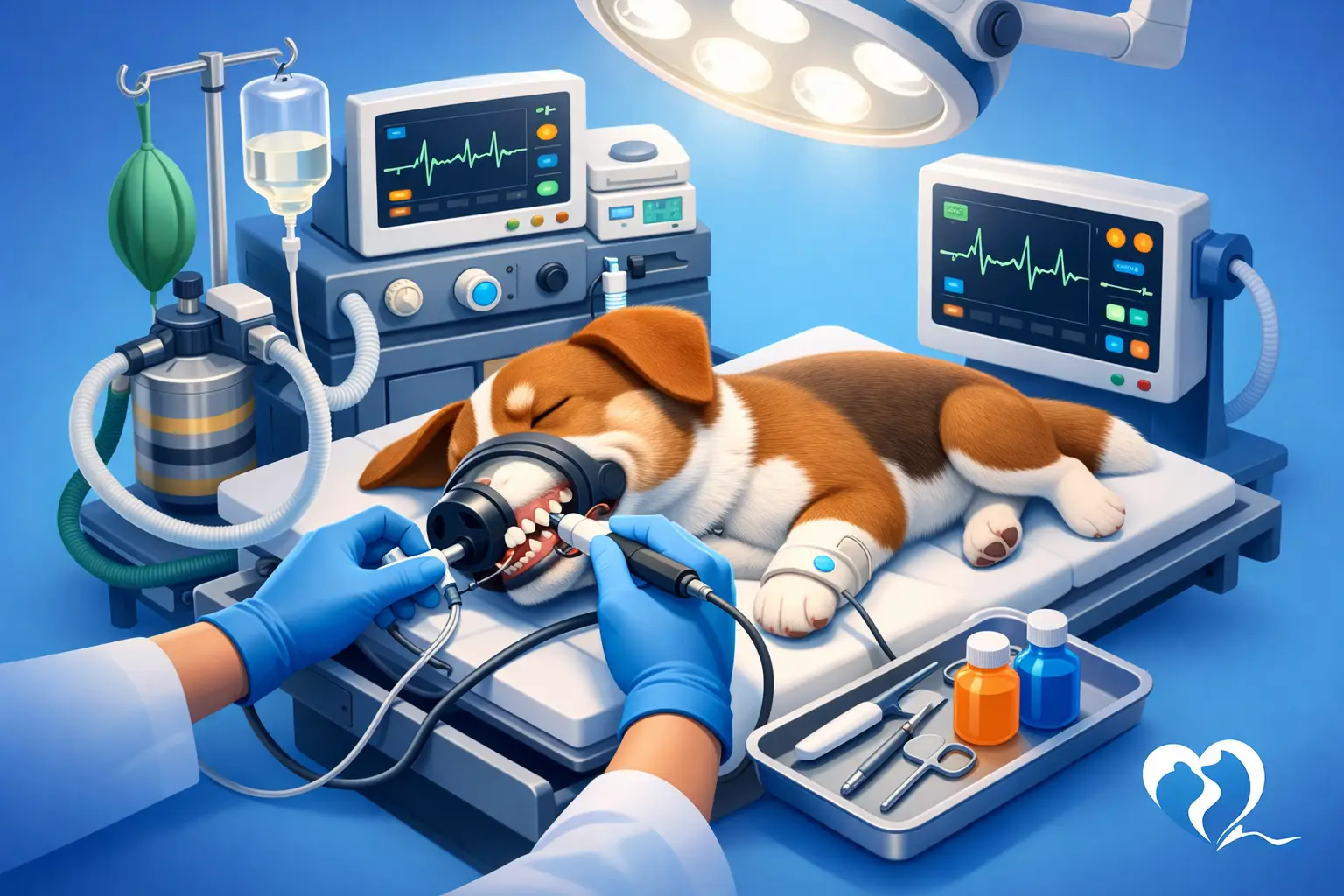
Anesthesia safety depends heavily on active monitoring and individualized support. Before the procedure, your dog receives medications chosen for their health status and needs. An IV catheter is commonly placed so the team can give fluids and medications quickly if needed. Once anesthesia begins, a breathing tube is placed to protect the airway and deliver oxygen and anesthetic gas in a controlled way.
Throughout the procedure, trained staff monitor heart rate, breathing, oxygen levels, blood pressure, body temperature, and anesthetic depth. Those readings matter because anesthesia is not static. Dogs respond differently over time, and doses may need adjustment. Monitoring lets the veterinary team respond early rather than late.
Temperature support is another detail many owners do not think about. Small dogs, thin dogs, and seniors can lose body heat quickly under anesthesia. Warming measures help reduce complications and support smoother recovery.
Dental X-rays are part of the value
Many problems cannot be seen just by looking at the crown of the tooth. Dental X-rays can reveal root infection, retained roots, bone loss, fractures, and other hidden disease. If your dog is already safely anesthetized, this is the time to gather a full picture of oral health.
That can affect both safety and cost in a practical way. Finding disease during the procedure allows the team to address it appropriately rather than sending your dog home with persistent pain or needing to repeat anesthesia later for missed problems.
When anesthesia risk may be higher
There are situations where extra caution is needed. Dogs with heart disease, airway problems, seizure disorders, severe obesity, endocrine disease, or advanced organ dysfunction may carry higher anesthetic risk. Flat-faced breeds can also require especially thoughtful airway management.
Higher risk does not always mean a dental cleaning should be avoided. Sometimes it means the plan needs to change. Additional diagnostics, referral-level monitoring, modified drug choices, or delaying the procedure until another condition is better controlled may all be appropriate. The safest answer is not always yes right away, but it is also not automatically no.
This is where a clinically thorough veterinary team makes a difference. Good medicine is not about pretending there is zero risk. It is about understanding the risk clearly and managing it carefully.
The risk of skipping dental care is real too
It is easy to focus only on what could go wrong with anesthesia and overlook what ongoing dental disease can do over time. Periodontal disease is common in dogs, especially small breeds, and it is more than a cosmetic issue.
Infected gums and diseased teeth can cause chronic pain, tooth loss, bad breath, oral bleeding, and difficulty eating. Bacteria and inflammation can also place stress on the body. While every dog is different, untreated dental disease can contribute to broader health concerns and often becomes more expensive to treat once it is advanced.
There is also a timing issue. A mild dental problem in a younger, otherwise healthy dog may be addressed with lower anesthetic risk than the same problem years later after it has progressed and the dog has developed other medical conditions. Waiting can sometimes feel safer in the short term while actually narrowing safer options later.
How to talk with your vet about dog dental cleaning anesthesia safety
A good dental consultation should leave you better informed, not pressured. If you are trying to decide what is best for your dog, ask how the team evaluates anesthetic risk, what pre-anesthetic testing is recommended, who monitors your pet during the procedure, and what happens if extractions or other treatment are needed.
It is also reasonable to ask what recovery typically looks like and what pain control is used. A trustworthy team should be comfortable walking you through the process in plain language. For many families, especially those balancing budgets, it also helps to discuss expected costs up front and whether staged planning is possible if additional disease is found.
At Pet Care Partners, this kind of conversation matters because pet owners deserve both medical clarity and compassion when making decisions that affect a family member.
What recovery is usually like
Most dogs are sleepy after anesthesia and may be quieter than usual for the rest of the day. Some have a mild sore throat from the breathing tube, and dogs who had extractions may need soft food, medication, and a little more downtime. Many are back to their normal routines quickly, often seeming more comfortable once painful dental disease has been treated.
The veterinary team should send you home with clear instructions about feeding, activity, medications, and warning signs to watch for. If your dog has persistent vomiting, trouble breathing, severe lethargy, heavy bleeding from the mouth, or anything that does not seem right, follow up promptly.
Safety does not end when the cleaning is over. Recovery support is part of the overall standard of care.
The hardest part of dental decisions is that there is no such thing as zero risk, only informed choices. For most dogs, professional dental care with appropriate anesthesia, screening, and monitoring is far safer than living with ongoing oral pain and infection. If you are unsure, start with the conversation. The right veterinary team will help you weigh your dog’s specific risks with honesty, skill, and the kind of reassurance that comes from a plan built around your pet, not a generic answer.