A pet can seem mostly fine one day, then skip dinner, vomit twice, or start breathing a little harder than usual the next. In those moments, pet ultrasound when is it needed becomes a very practical question, not just a medical one. For many dogs and cats, ultrasound helps veterinarians look beneath the surface quickly, safely, and with far more detail than a physical exam alone can provide.
What a pet ultrasound actually shows
Ultrasound uses sound waves to create real-time images of soft tissues inside the body. That matters because many common pet problems do not show up clearly from the outside. A veterinarian may be able to feel that the abdomen is painful or notice that the gums are pale, but imaging helps answer the next question: why?
Unlike X-rays, ultrasound is especially useful for looking at organs such as the liver, spleen, kidneys, bladder, intestines, and uterus. It can also help assess the heart, detect fluid in the chest or abdomen, and identify masses, inflammation, blockages, or changes in organ shape and texture. In the right case, it gives information that can change treatment decisions the same day.
That does not mean ultrasound replaces every other test. Bloodwork, X-rays, urine testing, and a hands-on exam still matter. In many cases, ultrasound works best as part of the bigger picture rather than as a standalone answer.
Pet ultrasound when is it needed for dogs and cats?
The short answer is this: ultrasound is often needed when your veterinarian suspects a problem involving soft tissues, internal organs, fluid buildup, pregnancy, or the heart. It is also commonly recommended when a pet has symptoms that are vague but concerning.
A dog with repeated vomiting, a cat that suddenly stops eating, or a senior pet losing weight without explanation may all need more than routine testing. When symptoms do not point to one obvious cause, ultrasound helps narrow the possibilities. It can reveal intestinal thickening, bladder stones that are not easy to detect otherwise, enlarged organs, or free fluid that suggests bleeding or inflammation.
Sometimes the need is urgent. If a pet is weak, collapses, has a swollen abdomen, strains to urinate, or shows signs of internal pain, ultrasound may be used quickly to help guide emergency care. In other situations, it is scheduled after a primary exam when symptoms have been developing more gradually.
Common signs that may lead to an ultrasound
Many pet owners expect advanced imaging only for major emergencies, but that is not always the case. Ultrasound is often recommended for everyday symptoms that have gone on too long, keep coming back, or do not make sense based on initial lab work.
Digestive signs are one of the most common reasons. Ongoing vomiting, diarrhea, constipation, appetite loss, or unexplained weight loss can all justify a closer look at the stomach and intestines. If your pet seems uncomfortable after eating or has a tense abdomen, that adds to the concern.
Urinary issues are another frequent reason. Straining to urinate, blood in the urine, accidents in the house, or recurrent urinary tract problems may point to bladder disease, stones, sediment, or structural changes. In female pets that are not spayed, ultrasound can also help evaluate uterine conditions.
There are other cases where the signs are less obvious. Pale gums, weakness, abnormal bloodwork, a newly felt abdominal mass, labored breathing, or fluid around the belly can all lead to ultrasound. In cats especially, the symptoms may be subtle. A quieter-than-normal cat who hides more, eats less, and loses weight may be telling you something is wrong internally.
When ultrasound is preferred over X-rays
Pet owners often ask why both tests might be needed. The answer depends on what the veterinarian is looking for.
X-rays are excellent for bones, some foreign objects, and getting a broad view of the chest or abdomen. They can show gas patterns, major organ enlargement, some stones, and changes in the lungs. Ultrasound, however, is better at showing soft tissue detail and movement. It can help distinguish a fluid-filled structure from a solid mass, assess how organs are layered, and show whether fluid is present where it should not be.
For example, if a dog ate something suspicious, X-rays may be the first step. If the answer is still unclear, ultrasound may help determine whether the intestines are inflamed, obstructed, or moving normally. If bloodwork shows abnormal liver values, ultrasound can help show whether the liver looks enlarged, nodular, congested, or otherwise abnormal.
This is one of those situations where it depends on the case. One test is not automatically better than the other. They answer different questions.
Pregnancy, heart disease, and senior pet care
Ultrasound is also used in more specific situations that are not always emergencies.
Pregnancy ultrasound can confirm whether a pet is pregnant and check for fetal heartbeats at the appropriate stage. It is useful, but it is not always the best way to count puppies or kittens accurately. Later in pregnancy, X-rays may provide a better count. That is a good example of how the right imaging choice depends on the timing and the goal.
Cardiac ultrasound, also called echocardiography, is used to evaluate the heart. If a veterinarian hears a murmur, notices abnormal rhythms, or sees signs such as coughing, weakness, fainting, or breathing difficulty, an echo may be recommended. It can show how the heart chambers and valves are functioning and whether heart disease is contributing to your pet’s symptoms.
For older pets, ultrasound is often part of investigating age-related changes. Senior dogs and cats are more likely to develop tumors, organ disease, chronic intestinal issues, and hormonal conditions. When a pet is slowing down in a way that seems beyond normal aging, ultrasound can help determine whether there is a treatable cause.
What happens during the appointment
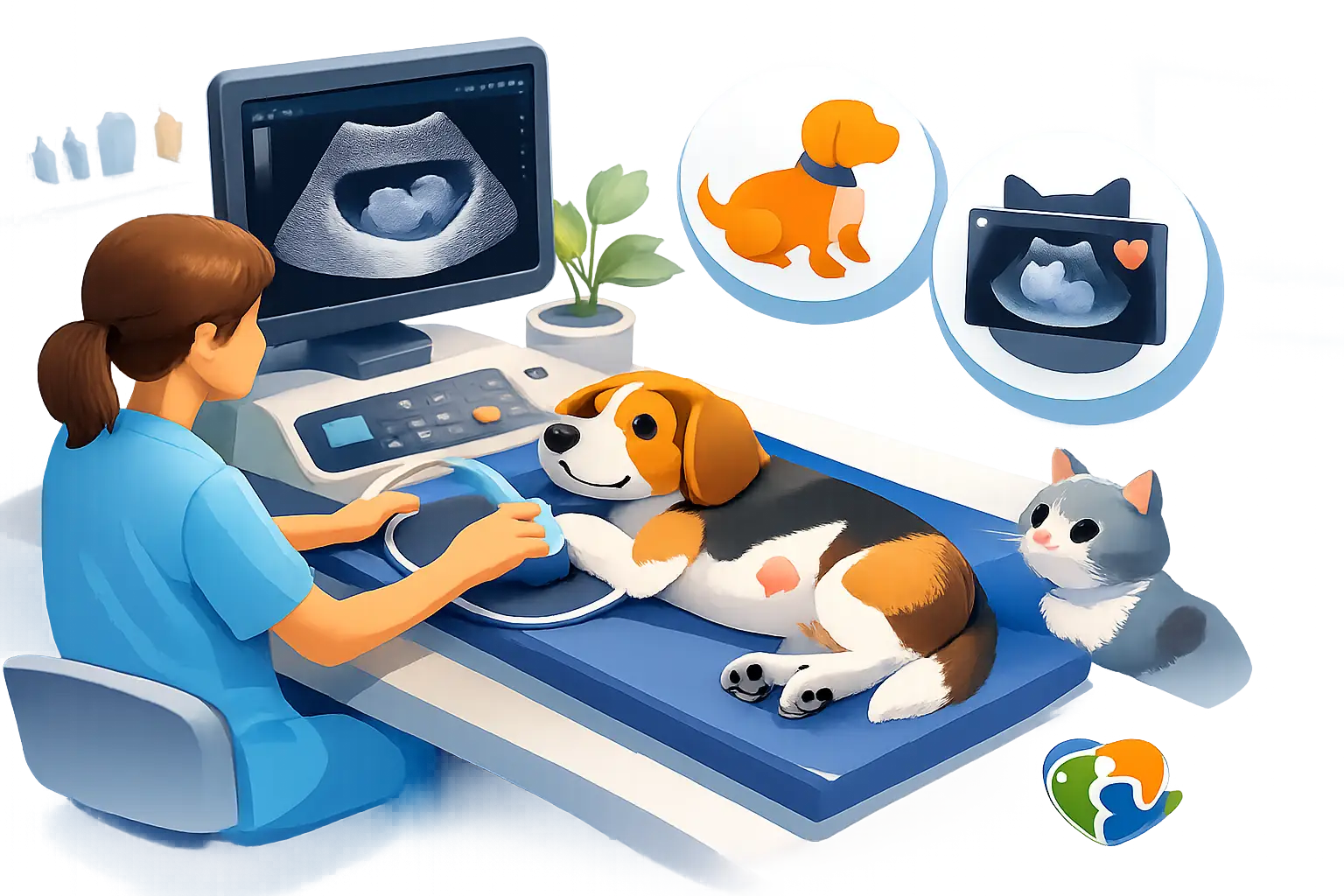
Most pet owners are relieved to learn that ultrasound is noninvasive and generally well tolerated. In many cases, the pet lies on a padded table while a small area of fur is clipped so the probe can make clear contact with the skin. Gel is applied, and the images are viewed in real time.
Some pets stay calm with gentle restraint and reassurance alone. Others, especially those in pain or those who are very anxious, may need mild sedation. Sedation is not always required, and whether it is used depends on the pet’s condition, comfort, and ability to stay still long enough for accurate imaging.
The appointment itself may be fairly quick, but timing varies. A focused emergency scan can be done fast, while a complete abdominal study may take longer. If the ultrasound identifies something concerning, the next steps could include additional lab work, medication, needle sampling, surgery, monitoring, or referral for specialized care.
Is pet ultrasound worth the cost?
This is a fair question, especially for families trying to balance urgent pet care with a household budget. The value of ultrasound comes from better decision-making. When symptoms are unclear, guessing can lead to delayed treatment, unnecessary medication, or multiple visits that still do not provide answers.
That said, not every pet with vomiting or diarrhea needs an ultrasound on day one. Some mild cases improve with an exam, supportive care, and basic testing. The recommendation becomes stronger when symptoms are severe, persistent, recurrent, or paired with abnormal findings. A trustworthy veterinary team should explain why the test is being suggested and what information it is expected to provide.
For cost-conscious pet owners, the most helpful approach is usually to ask what the top concerns are, whether ultrasound is urgent or can be scheduled, and how the results would change treatment. Good medicine is not about ordering every test. It is about choosing the right test at the right time.
When not to wait
Some signs should push ultrasound higher on the priority list. If your pet has a distended abdomen, repeated unproductive vomiting, trouble breathing, collapse, severe weakness, or cannot urinate normally, prompt veterinary evaluation matters. In these cases, imaging may be part of stabilizing the pet and deciding whether emergency treatment or surgery is needed.
In communities where families need access to both routine and urgent veterinary care, having ultrasound available can make a real difference. At Pet Care Partners, that kind of diagnostic support helps connect symptoms to answers faster, which is often the first step toward relief.
If your dog or cat is acting unlike themselves and the cause is not obvious, ultrasound may be the test that turns uncertainty into a plan. The most helpful next step is not to wait for symptoms to become dramatic. It is to trust what you are seeing and ask whether a closer look inside could spare your pet more discomfort.