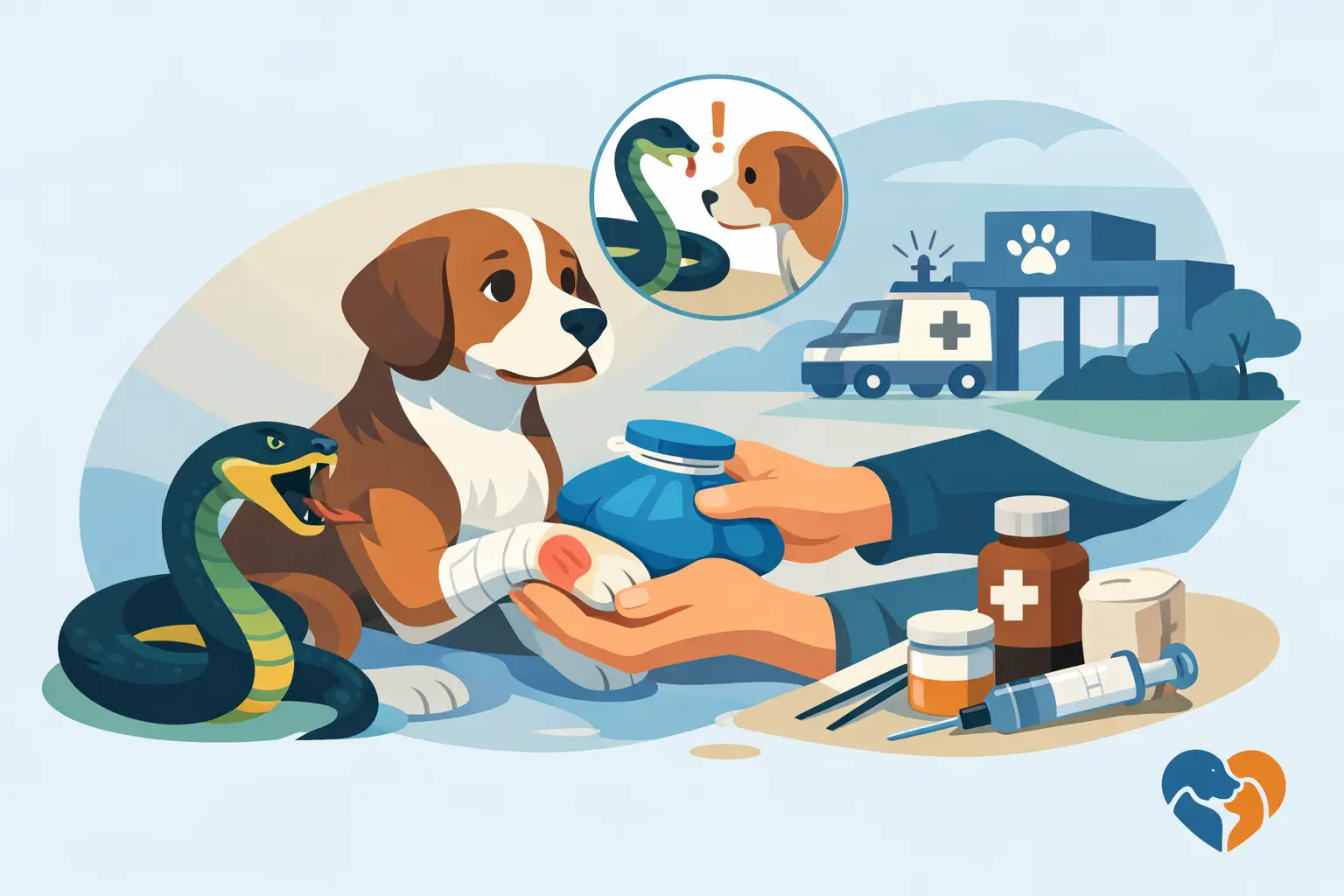
A dog yelps, jumps back from a bush, and suddenly starts swelling around the face or leg. That moment is frightening, and when a snake may be involved, minutes matter. Snake bite treatment for dogs is not something to manage at home. The safest next step is urgent veterinary care, even if your dog seems stable at first.
In Southern California, dogs can run into rattlesnakes on trails, in yards, near rocks, or even around landscaping. Some bites are dry, meaning little or no venom was injected, but there is no reliable way to tell that at home. A dog that looks only mildly uncomfortable can deteriorate quickly, which is why prompt medical attention is so important.
Why snake bites in dogs are a medical emergency
Venom can affect the body in several ways depending on the snake, the amount injected, and where the bite happened. In many dogs, venom causes severe pain, rapid swelling, bruising, tissue damage, weakness, and problems with blood clotting. In more serious cases, it can lead to shock, trouble breathing, collapse, or organ injury.
The location of the bite matters too. Bites on the face are common because dogs investigate with their nose. Those bites can become especially dangerous if swelling starts to affect the airway. A bite on a leg may look less dramatic at first, but it can still cause major tissue damage and circulation problems.
Small dogs, senior dogs, and pets with underlying health conditions may be at higher risk of severe complications. That said, even healthy adult dogs can become critically ill after envenomation.
Snake bite treatment for dogs starts before you reach the clinic
The first priority is simple: get your dog to a veterinarian as quickly and calmly as possible. What you do in the first few minutes can help, but it should never delay transport.
If you suspect a snake bite, keep your dog as still as you can. Activity can increase circulation and may help venom spread faster. Carry your dog if it is safe to do so, especially if the bite is on a limb. If your dog is too large to carry, walk them slowly and directly to the car.
Try to keep yourself calm as well. Dogs pick up on our stress, and panic can make an already difficult situation worse. If another person is with you, have them call the veterinary hospital while you head in. Let the team know you are coming with a possible snake bite so they can prepare.
What not to do after a snake bite
A lot of old advice about snake bites is either ineffective or harmful. Do not cut the wound, do not try to suck out venom, and do not apply ice. Do not use a tourniquet. Do not give over-the-counter pain medication unless a veterinarian specifically instructs you to do so. Human medications can be dangerous for dogs, and some can worsen bleeding risks.
It is also best not to spend time trying to catch or kill the snake. If you can identify it from a safe distance, that may be helpful, but your safety comes first. A photo taken from far away is enough if you happen to have one. If not, treatment decisions can still be made based on your dog’s signs and exam findings.
Signs your dog may have been bitten by a snake
Sometimes owners see the snake. Often, they do not. What they notice first is sudden pain or swelling. Common signs include yelping, limping, puncture wounds, swelling of the face or limb, bruising, drooling, shaking, weakness, vomiting, and rapid breathing.
Some dogs become restless and agitated. Others seem quiet, weak, or unusually tired. Bleeding from the bite site or gums can happen in more serious cases. If your dog collapses, has trouble breathing, or becomes nonresponsive, treat it as a life-threatening emergency.
Not every bite looks dramatic right away. Early signs can be subtle, and swelling may continue to worsen over the next several hours.
What veterinarians do for snake bite treatment for dogs
Treatment depends on how your dog is doing when they arrive, what type of snake is suspected, and how severe the envenomation appears. The first steps usually focus on stabilizing pain, breathing, circulation, and shock.
Your veterinary team will examine the bite area, check vital signs, and often recommend bloodwork to look for clotting problems, organ stress, and other venom effects. Monitoring is a big part of care because a dog’s condition can change quickly, especially in the first several hours.
Pain control is essential. Snake bites are very painful, and appropriate veterinary medications can make a major difference in comfort and recovery. Many dogs also need IV fluids to support blood pressure and hydration.
When antivenom is recommended
Antivenom can be one of the most effective treatments for venomous snake bites, especially in moderate to severe cases. It works by helping neutralize venom and can reduce the progression of damage. Whether it is recommended depends on your dog’s symptoms, the suspected species, and the clinical judgment of the veterinarian.
Antivenom can be lifesaving, but it is not necessary in every case. Some dogs do well with close monitoring and supportive care alone. Others clearly benefit from early antivenom, particularly if they have rapidly progressing swelling, clotting abnormalities, shock, or significant systemic illness. This is one of those situations where timing matters, and the answer is not one-size-fits-all.
Other hospital care your dog may need
Some dogs need oxygen support if facial swelling or systemic effects make breathing harder. Others may need repeated lab testing, heart monitoring, medications for nausea, or treatment for abnormal bleeding. Severe tissue damage can require wound management over time, and recovery does not always end when the swelling goes down.
Hospitalization is common after venomous bites because complications can develop after the initial exam. A dog that looks improved after pain medication may still need several hours of observation, and some need overnight care.
Can a dog recover fully after a snake bite?
Many dogs do recover well, especially when treatment happens quickly. Prognosis depends on the type of snake, the amount of venom injected, the bite location, the dog’s size, and how soon veterinary care begins. Early treatment usually leads to better outcomes and fewer complications.
Recovery is not always immediate. Swelling, bruising, and soreness can last for days. In some cases, tissue damage around the bite can take longer to heal. Follow-up visits may be needed to recheck bloodwork, monitor wound healing, or adjust medications.
If your dog is sent home, follow discharge instructions closely. Keep activity limited, give all prescribed medications exactly as directed, and watch for worsening swelling, lethargy, bleeding, vomiting, or breathing changes.
How to reduce the risk of future bites
Prevention matters, especially for dogs that hike, explore brush, or spend time in snake-prone areas. Keep dogs leashed on trails when possible, avoid tall grass and rocky hiding spots, and stay alert in warm weather when snakes are more active. Yards can also attract snakes if there are rodent populations, wood piles, dense ground cover, or debris where they can hide.
Training can help some dogs learn to avoid snakes, but it should not create a false sense of security. Even well-trained dogs can make mistakes when startled or excited. The goal is risk reduction, not guaranteed protection.
For pet owners in areas like Lancaster, Palmdale, and nearby communities where rattlesnake exposure is a real concern, it helps to know in advance where to go for urgent veterinary care. In an emergency, having a plan saves time.
When to seek care right away
If you think your dog may have been bitten by a snake, do not wait for symptoms to become severe. Immediate evaluation is the safest choice. This is especially true if there is facial swelling, intense pain, weakness, vomiting, collapse, or any sign of breathing difficulty.
At Pet Care Partners, we understand how stressful these emergencies are for families. What owners need in that moment is clear guidance, fast access to care, and a team that can move quickly from diagnosis to treatment.
A suspected snake bite is one of those problems where hoping it stays mild can cost precious time. If something feels off after an encounter in the yard, on a walk, or on the trail, trust your instincts and get your dog seen right away. A calm, quick response gives your pet the best chance to heal well.