
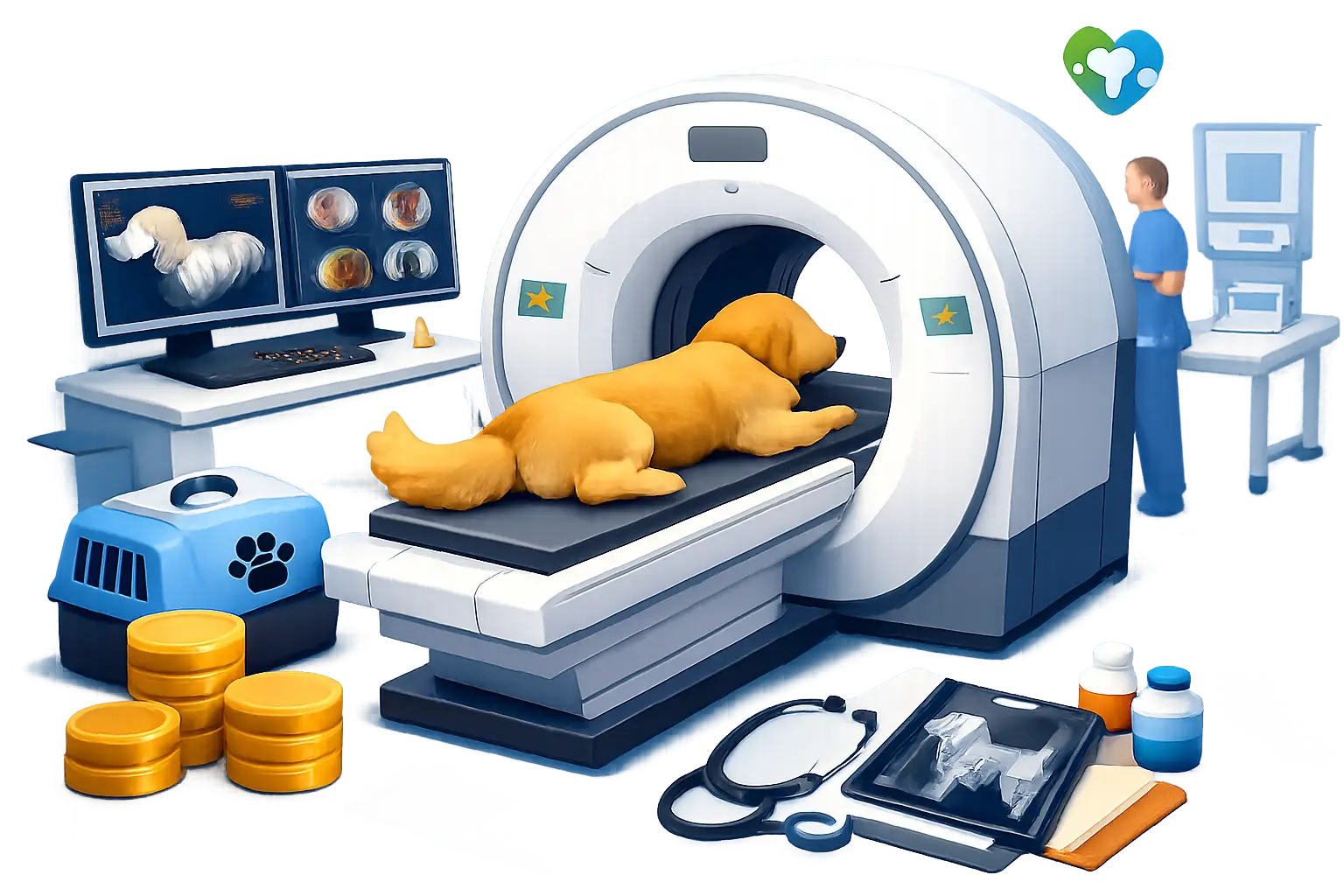
When your veterinarian says your dog may need advanced imaging, the first question many families ask is simple: what is the ct scan for dogs cost? That question usually comes at a stressful moment, when your pet may be in pain, having trouble breathing, limping, or showing symptoms that basic X-rays cannot fully explain. Knowing what drives the cost can help you make a clearer, more confident decision.
CT scan for dogs cost: the typical range
In most cases, a CT scan for a dog costs several hundred to a few thousand dollars, depending on the reason for the scan and how it is performed. A common range is about $800 to $2,500, but some cases fall below or above that. A straightforward scan of one area may cost less than a more complex study that includes contrast dye, anesthesia, specialist review, and emergency care.
That wide range can feel frustrating, but it reflects how different each case is. A young dog with a nasal issue being scanned during a scheduled appointment is very different from a senior dog in an emergency setting who needs chest imaging, sedation, monitoring, and same-day interpretation.
Why the price varies so much
A CT scan is not just one line item. It is a diagnostic process with several moving parts, and each one can affect the final bill.
The body area being scanned
Scanning a small, clearly defined area often costs less than imaging multiple regions. A scan focused on the nasal cavity, a leg, or the skull may be more straightforward than imaging the chest, abdomen, or spine. If your veterinarian needs a broader view to look for cancer spread, internal injury, or multiple problem areas, the cost may increase.
Whether contrast is needed
Many CT scans are done with contrast material to help highlight blood vessels, masses, inflammation, or organ detail. Contrast can make the images more useful, but it also adds to the price. It may require IV catheter placement, extra preparation, and closer patient monitoring.
Sedation or anesthesia
Most dogs need at least some sedation for a CT scan, and many need general anesthesia. The images must be very still to be useful, and even calm dogs may move, pant, or become anxious in a medical setting. The safer and more comfortable option is often sedation or anesthesia, especially for painful conditions.
This part matters for both quality and safety. The fee may include the medications, pre-anesthetic exam, monitoring equipment, and recovery care afterward. Dogs with heart disease, breathing concerns, or advanced age may need additional precautions, which can affect cost.
The facility and level of care
A general practice hospital with imaging capability may price differently than a specialty or emergency center. If your dog needs a CT scan after hours, on a weekend, or as part of urgent care, the total may be higher. That is not simply because of the machine. Emergency teams often provide immediate stabilization, continuous monitoring, and faster interpretation when time matters.
Radiologist or specialist review
The scan itself is only part of the value. Someone has to interpret it accurately. In many cases, a board-certified veterinary radiologist or specialist reviews the images and provides a report. That expertise can add to the bill, but it is also what helps turn the scan into a diagnosis and treatment plan.
What may be included in the total CT scan for dogs cost
When comparing prices, it helps to ask what is actually included. One estimate may look lower at first, but not include services that another hospital bundles into the total.
Your estimate may include the physical exam, sedation or anesthesia, IV catheter placement, contrast dye, the scan itself, monitoring, image interpretation, and recovery time. It may also include pre-scan bloodwork if your dog needs anesthesia and the veterinary team wants to check organ function first.
Some estimates do not include follow-up visits, biopsy procedures, surgery, or other treatment that may come after the CT scan. If a mass, fracture, or spinal issue is found, the imaging bill may be only one part of a larger medical plan.
When a CT scan is worth the cost
Pet owners naturally want to know if the scan is truly necessary. That is a fair question. A CT scan is usually recommended when it can answer something important that other tools cannot.
CT scans are especially useful for looking at complex bone structures, nasal passages, lung detail, certain tumors, fractures, spinal issues, and internal injuries. They can also help surgeons plan procedures more precisely. In some cases, the scan prevents unnecessary treatment by showing that a problem is less severe than expected. In others, it helps the team act faster because the images reveal a condition that needs urgent care.
The value is not only in finding a diagnosis. Sometimes the value is in ruling out the most serious possibilities, which can guide the next step and reduce uncertainty.
Conditions that commonly lead to a CT recommendation
Veterinarians often recommend CT imaging for chronic nasal discharge, unexplained swelling, facial pain, suspected tumors, seizure workups, orthopedic injuries, spinal pain, chest masses, and trauma cases. Dogs hit by cars or those with complex fractures may need CT imaging because standard X-rays do not always show the full extent of injury.
For cancer patients, CT may be used to assess tumor size, location, or spread before surgery or other treatment. That information can be critical for making realistic decisions about care, recovery, and cost.
How to talk with your veterinarian about price
If the recommended scan feels financially overwhelming, say so. A good veterinary team will not view that as a lack of love for your dog. It is a practical concern, and most families need clear information before agreeing to advanced diagnostics.
Ask whether the estimate includes sedation, contrast, radiology review, and recovery. Ask if the scan is urgent or if it can be scheduled. You can also ask whether there are lower-cost alternatives, such as X-rays, ultrasound, bloodwork, or a referral to a facility with broader imaging access.
Sometimes the answer is that a CT scan is the best next step. Other times, your veterinarian may be able to stage the workup so you are not paying for everything at once.
Can pet insurance help?
If you have pet insurance, coverage depends on your plan and whether the condition is considered new or pre-existing. Many accident and illness plans help cover advanced imaging like CT scans once the deductible is met. Some plans reimburse a percentage of the bill rather than paying the hospital directly.
If you do not have insurance, ask about payment options before the scan is performed. Some hospitals can also help you prioritize immediate needs versus follow-up care. For cost-conscious families, transparency matters as much as the number itself.
Is a CT scan better than an MRI or X-ray?
It depends on what your veterinarian is looking for. X-rays are faster, less expensive, and often the first imaging step. They are useful for many bone and chest concerns, but they provide less detail. MRI is often better for certain brain, spinal cord, and soft tissue conditions, but it is usually more expensive and less available.
CT sits in the middle for many cases. It is more advanced than X-ray, often faster than MRI, and particularly strong for bony structures, chest imaging, and surgical planning. The right test is not always the cheapest one. It is the one most likely to answer the medical question in front of you.
Finding affordable, high-quality care
If your dog needs a CT scan, the goal is not just finding the lowest number. It is finding a team that explains the recommendation clearly, uses the scan appropriately, and builds a plan around your dog’s needs and your budget.
That may mean choosing a hospital that can coordinate diagnostics, treatment, and follow-up in one place. For families in Southern California, especially those balancing work, travel time, and urgent medical decisions, having access to integrated veterinary services can reduce delays and confusion. Pet Care Partners focuses on making advanced care more accessible while keeping communication clear and compassionate.
A CT scan can feel like a big expense because it often comes during an already emotional moment. But when it gives your veterinarian the detail needed to diagnose pain, plan treatment, or avoid guesswork, it can also be one of the most useful investments in your dog’s care. If your dog has been recommended for advanced imaging, ask questions, review the estimate carefully, and let the veterinary team help you weigh what matters most for your pet and your family.