
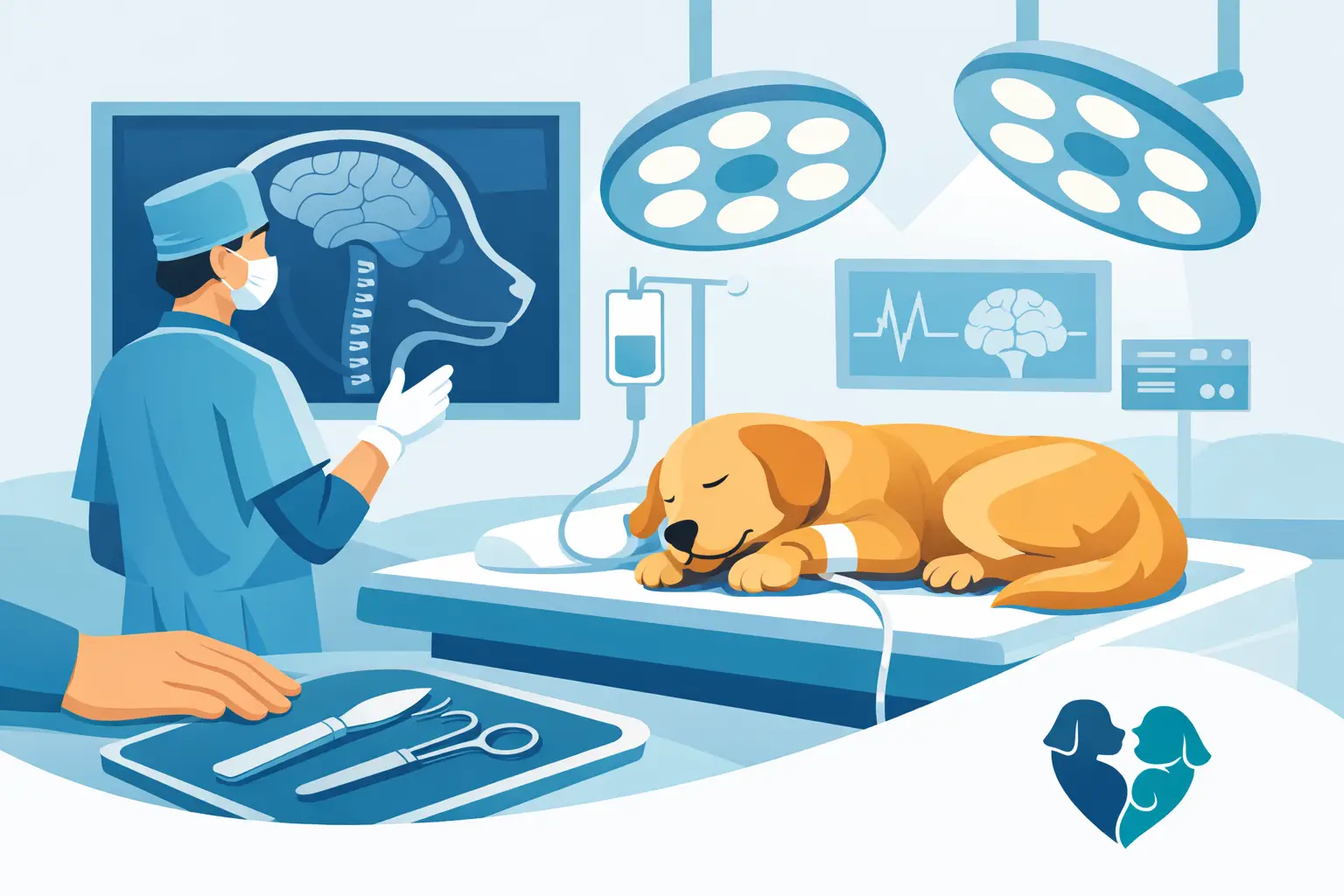
When a dog suddenly cannot walk, cries out when picked up, or starts dragging a paw, pet owners usually know something is wrong right away. What they do not always know is how quickly a spinal or brain problem can change, or when neurological surgery for dogs becomes part of the conversation.
That uncertainty is hard. Neurologic problems can look dramatic, and they often are. But not every dog with back pain or weakness needs surgery, and not every case has the same timeline. The key is getting the right evaluation early, because treatment decisions often depend on how severe the symptoms are, how fast they appeared, and what imaging shows.
When neurological surgery for dogs is recommended
Neurological surgery for dogs is usually considered when a problem affects the brain, spinal cord, or nerves in a way that causes significant pain, loss of function, or ongoing decline. In many cases, surgery is not the first step. Your veterinarian may begin with an exam, pain control, cage rest, bloodwork, and imaging to understand what is happening before recommending an operation.
One of the most common reasons for neurologic surgery in dogs is intervertebral disc disease, often called IVDD. This happens when disc material presses on the spinal cord. Some dogs show mild pain at first. Others lose coordination, knuckle over, or become unable to stand within hours. In those cases, timing matters because prolonged pressure on the spinal cord can reduce the chance of recovery.
Other conditions may also require surgery, including spinal fractures, vertebral instability, certain tumors, brain masses, severe lumbosacral disease, and some congenital abnormalities. A dog with a slipped disc in the neck may need a different approach than a dog with lower back compression. That is why a neurologic exam and advanced imaging are so important. Surgery is never one-size-fits-all.
Signs that need prompt veterinary attention
Some symptoms can wait for a scheduled visit. Others should be treated as urgent. If your dog is stumbling, suddenly weak, unable to rise, showing neck or back pain, yelping when moved, losing bladder control, or having seizures, it is best to have them evaluated quickly.
Dogs are very good at hiding pain until they cannot. A dog that seems quiet, reluctant to jump, or unwilling to use stairs may be showing the early signs of spinal discomfort. If that same dog later starts dragging a leg or collapses, the situation has changed. That progression can happen over days, but it can also happen in a single afternoon.
The most urgent cases involve rapid loss of movement, worsening paralysis, severe pain, or loss of deep pain sensation. Those findings do not automatically mean surgery will be performed, but they do mean delays can carry real consequences.
How dogs are diagnosed before surgery
Before recommending surgery, veterinarians need to answer two questions. First, where is the problem located in the nervous system? Second, what is causing it?
That process starts with a physical exam and neurologic exam. Your veterinarian will assess reflexes, paw placement, muscle tone, pain response, coordination, and whether the problem seems to involve the brain, spinal cord, or peripheral nerves. From there, imaging helps confirm the cause.
X-rays can be useful for fractures, alignment problems, or ruling out other causes of pain, but they do not show the spinal cord well enough to diagnose many neurologic conditions by themselves. Advanced imaging such as MRI or CT is often needed to see disc compression, inflammation, tumors, bleeding, or structural changes in detail.
This step can feel overwhelming for families, especially when symptoms are severe and decisions need to be made quickly. But accurate imaging helps avoid guesswork. It tells the team whether surgery is likely to help, what type of procedure is needed, and how urgent the case really is.
What neurological surgery for dogs can involve
The exact procedure depends on the diagnosis. For dogs with IVDD, surgery often focuses on removing disc material that is compressing the spinal cord. That can mean approaching the spine from the top, side, or underside, depending on the location of the problem.
For fractures or instability, the goal may be to decompress the spinal cord and stabilize the vertebrae. For brain masses, surgery may involve removing as much abnormal tissue as safely possible or obtaining samples to guide further treatment. In some cases, surgery is meant to cure the problem. In others, it is meant to reduce pain, preserve function, or improve quality of life.
There are always trade-offs. Neurologic surgery can be life-changing, but it is still major surgery. It may require anesthesia, hospitalization, advanced monitoring, pain management, and a structured recovery period. Some dogs improve quickly. Others need weeks or months of rehabilitation.
Recovery is more than incision healing
One of the biggest misconceptions about neurologic surgery is that the operation is the whole treatment. It is not. Surgery addresses the structural problem, but recovery depends on what the nervous system can do afterward.
Some dogs stand within a day or two. Others need sling support, bladder assistance, medication adjustments, and rehabilitation exercises before meaningful improvement begins. If nerves have been severely compressed or injured, healing can be slow. That does not always mean the surgery failed. Nerve tissue recovers differently than skin or bone.
Rehabilitation can make a major difference. Therapies may include controlled walking, range-of-motion work, balance exercises, underwater treadmill sessions, laser therapy, or other supportive treatments based on the dog’s condition. A coordinated care model can help families avoid the stress of piecing together surgery, follow-up care, and rehab from separate providers.
Owners also play a central role at home. Restricting activity, giving medications exactly as directed, preventing slips and falls, and monitoring appetite, urination, and comfort all matter. The first few weeks require patience. Dogs often feel better before they are fully healed, which can make them eager to do too much too soon.
Cost, prognosis, and the questions families ask most
For many families, the hardest part is not understanding what surgery is. It is deciding whether it is the right choice for their dog, their household, and their budget.
Cost varies widely depending on the diagnosis, imaging, surgical complexity, hospitalization time, and rehabilitation needs. A straightforward spinal procedure is different from brain surgery or fracture stabilization. It is reasonable to ask for a detailed estimate, likely follow-up costs, and what expenses may change if the recovery is more complicated than expected.
Prognosis also depends on the diagnosis and the dog’s neurologic status before surgery. A dog with back pain and mild weakness may have an excellent outlook. A dog that has lost deep pain sensation for an extended period may face a more guarded prognosis, even with surgery. That does not mean there is no hope. It means expectations need to be honest and individualized.
This is where clear communication matters. Families deserve to understand the best-case outcome, the likely outcome, and the possible setbacks. They also deserve support if surgery is not the right option. In some cases, medical management and comfort-focused care may be more appropriate than an operation.
Choosing the right setting for advanced neurologic care
When a dog may need neurologic surgery, speed and coordination matter. Access to advanced imaging, surgical capability, hospitalization, pain management, and rehabilitation can shape both the treatment plan and the recovery experience.
That is especially important for pet owners balancing work, finances, transportation, and the emotional stress of seeing their dog in crisis. A care team that can explain findings clearly, move quickly when needed, and support recovery after discharge can reduce a lot of the uncertainty that families feel in these moments.
For Southern California pet owners, having access to connected services can be a real advantage. Pet Care Partners supports dogs through urgent evaluation, diagnostics, surgery coordination, and recovery services so families are not left trying to manage complex care on their own.
When to trust your instincts
If your dog is showing signs of pain, weakness, poor coordination, or sudden changes in mobility, it is worth taking seriously even if the symptoms seem to come and go. Neurologic conditions do not always follow a predictable pattern. A dog can appear slightly off one morning and need urgent intervention later that day.
Trust the change you are seeing. You know your dog’s normal gait, posture, and behavior better than anyone. Getting an exam early does not commit you to surgery. It gives your veterinary team the best chance to identify the problem, explain the options, and protect your dog’s comfort and function while there is still time to act.