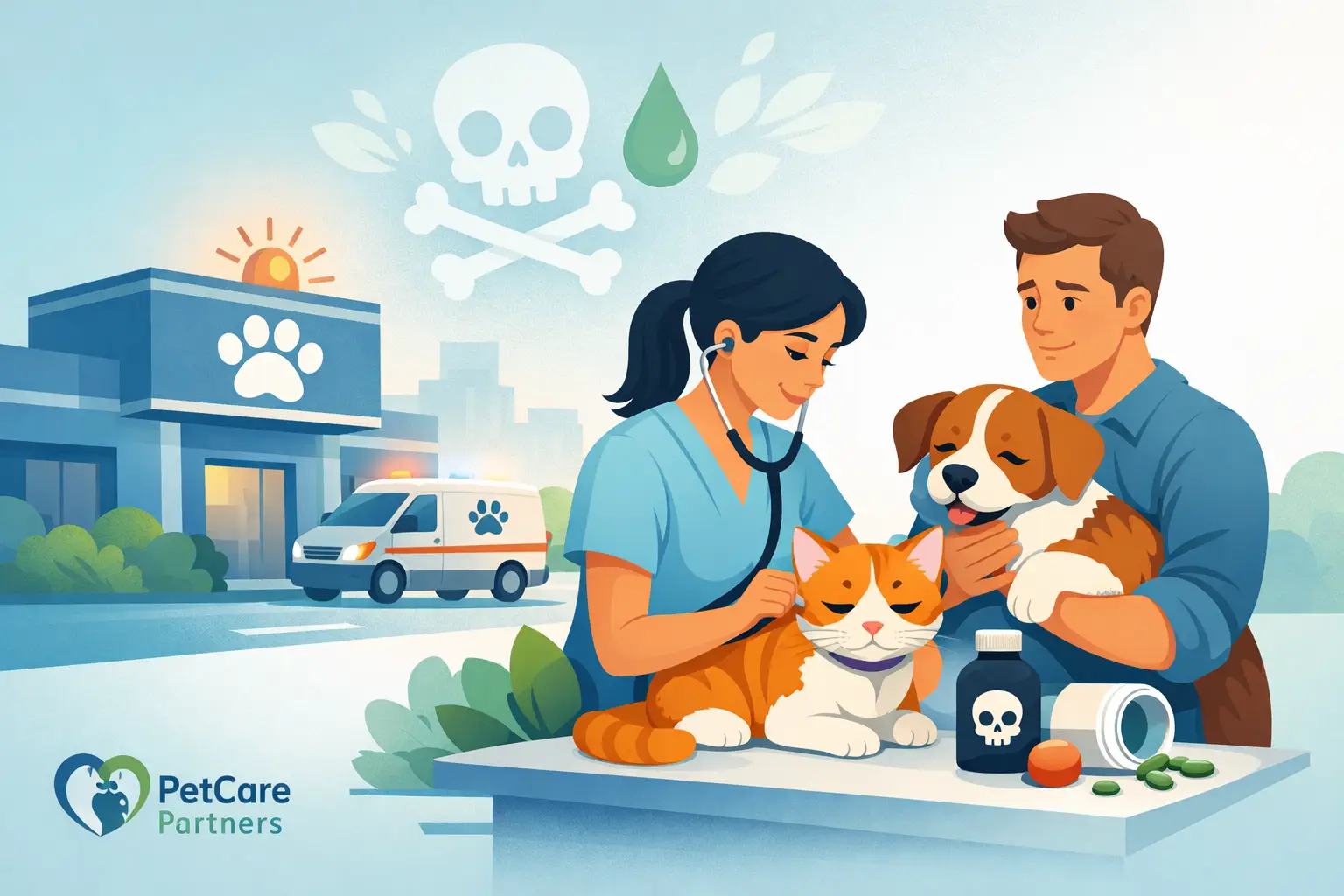
A dropped pill on the kitchen floor, a sugar-free gum wrapper in the trash, a chewed houseplant – poison exposure often happens in ordinary moments, not dramatic ones. When it does, finding an emergency vet for poison exposure quickly can make a real difference in how well your dog or cat responds to treatment.
The hardest part for many pet owners is that poisoning does not always look obvious at first. Some pets vomit right away. Others seem quiet, restless, shaky, or simply not like themselves. Waiting to see if it passes can cost valuable time, especially with toxins that affect the nervous system, heart, kidneys, or liver.
When to seek an emergency vet for poison exposure
If you know or strongly suspect your pet ate, drank, inhaled, or came into contact with something toxic, urgent veterinary guidance is the safest next step. This is true even if your pet seems normal in the moment. Some poisons cause delayed signs, and early treatment is often simpler, less invasive, and less expensive than waiting until a pet becomes critically ill.
Dogs and cats can be exposed to toxins in different ways. Dogs are more likely to eat something they should not, especially medications, food toxins, rodenticides, or items from the trash. Cats may be exposed through grooming after walking through a spilled chemical, chewing certain plants, or contact with topical products that were never meant for them.
An emergency visit is especially important if your pet has seizures, trouble breathing, collapse, repeated vomiting, severe lethargy, tremors, pale gums, agitation, or a swollen abdomen. These signs suggest the body is already reacting in a serious way.
Common poisons seen in dogs and cats
Many emergency cases involve substances that are easy to overlook because they are common at home. Human medications are a major one. Pain relievers, antidepressants, sleep aids, heart medications, and vitamins can all be dangerous depending on the dose and the species involved.
Food-related toxins are another frequent problem. Chocolate, xylitol, grapes, raisins, onions, garlic, alcohol, and foods with high fat content can all lead to urgent medical issues. The level of danger depends on what was eaten, how much, and the size and health of the pet.
Household products matter too. Cleaning agents, essential oils, automotive fluids, fertilizers, insecticides, and rodenticides can cause serious injury. With cats, lily exposure deserves special concern because even small amounts can lead to life-threatening kidney damage.
Topical exposures can be just as serious as swallowed toxins. A dog may absorb chemicals through the skin, and cats are particularly sensitive to certain flea and tick products made for dogs. Even if the product was applied with good intentions, species matters.
What to do before you leave for the hospital
Try to stay calm and gather details. Your veterinary team will want to know what your pet got into, when the exposure may have happened, and how much might be involved. Bring the packaging, label, plant sample, or a photo if you can do so safely. That information can help guide treatment quickly.
Do not induce vomiting unless a veterinary professional specifically tells you to. This is one of the most important points in any poison situation. Vomiting is not safe for every toxin. Caustic substances, petroleum products, and some sharp or foaming materials can do more damage on the way back up. Pets that are weak, sedated, or having neurologic signs can also aspirate if vomiting is forced.
Do not give milk, bread, oils, or home remedies unless your veterinary team instructs you to. These are common internet suggestions, but they can delay the right care and sometimes make the situation worse.
If your pet has something on the fur or paws, prevent grooming if possible. Use a towel, e-collar, or careful restraint while you head in. If you have been instructed to rinse the area, use plenty of lukewarm water and avoid causing additional stress. For cats especially, washing off a toxin can be helpful, but it is also easy to get scratched or overwhelmed if your pet is frightened.
What an emergency vet for poison exposure may do
Treatment depends on the toxin, the dose, the time since exposure, and how your pet is doing on arrival. There is no single poisoning protocol because different substances affect the body in very different ways.
If the exposure was recent and the toxin is one that can be removed safely, the veterinarian may recommend inducing vomiting in the hospital. In other cases, activated charcoal may be used to reduce absorption from the digestive tract. Some pets need both, while others need neither.
Supportive care is often the foundation of treatment. That may include IV fluids, anti-nausea medication, pain control, seizure management, blood pressure support, oxygen therapy, temperature support, or close monitoring in the hospital. Some toxins also have specific antidotes, but many do not. When there is no antidote, early stabilization and careful monitoring become even more important.
Bloodwork, urinalysis, imaging, and repeated lab checks may be recommended depending on the poison involved. This can feel like a lot when you are scared and trying to make decisions fast, but these tests help the team see whether organs like the kidneys, liver, heart, or clotting system are being affected.
There is also a financial reality to emergency care, and families understandably worry about cost. In many poison cases, prompt evaluation can actually reduce the chance that your pet will need more intensive hospitalization later. The right plan depends on the exposure, but being seen early usually gives your veterinarian more options.
Why timing matters so much
Poison exposure is one of those situations where “wait and see” can be risky. A pet may look stable while a toxin is still being absorbed or while organ damage is just beginning. By the time severe symptoms show up, treatment may become more complicated.
That said, not every exposure leads to the same outcome. A tiny lick of a mild irritant is not the same as a significant dose of rodenticide or a handful of prescription medication. This is why professional triage matters. The goal is not to panic over every possible hazard. It is to get an informed assessment quickly so your pet receives the right level of care.
For families balancing work schedules, distance, and budget, that decision can feel stressful. If you are in Antelope Valley, Santa Clarita Valley, Lancaster, Newhall, or nearby communities, having access to urgent and emergency veterinary support can make those first decisions more manageable when every minute feels important.
Signs that can appear hours later
One of the most confusing parts of poison exposure is the delayed reaction some pets have. They may seem mostly fine, then develop vomiting, diarrhea, drooling, wobbliness, tremors, excessive thirst, bruising, jaundice, or unusual behavior later. In some cases, internal injury develops quietly before there are visible symptoms.
This delayed pattern is one reason veterinarians ask detailed questions about the timing of exposure. A pet seen shortly after exposure may be treated very differently from a pet seen twelve hours later with active symptoms. Neither situation is hopeless, but the window for easier intervention may be smaller later on.
Prevention is never perfect, but it helps
Most pet owners do not realize how many poisoning risks are part of normal daily life until a scare happens. Medications left in a weekly sorter, snacks in a backpack, cleaning supplies under a sink, and plants brought home as gifts are all common sources of trouble.
Prevention usually comes down to storage and routine. Keep medications secured, use pet-safe pest control practices, double-check plants before bringing them inside, and avoid assuming a product is safe for both dogs and cats just because it is sold for pets. In multi-pet homes, that last point matters a lot.
If your pet has had one poisoning incident, it is worth treating that as a signal to look at the whole environment. Dogs that counter-surf or get into trash often need management changes, not just more supervision. Cats that chew plants may need safer enrichment options and a cleaner separation between living spaces and toxic décor.
When your pet may have been exposed to a toxin, it is always better to ask early than to wonder at home. Fast, compassionate care can protect not only your pet’s health, but also your peace of mind. If something feels off, trust that instinct and get professional help right away.