
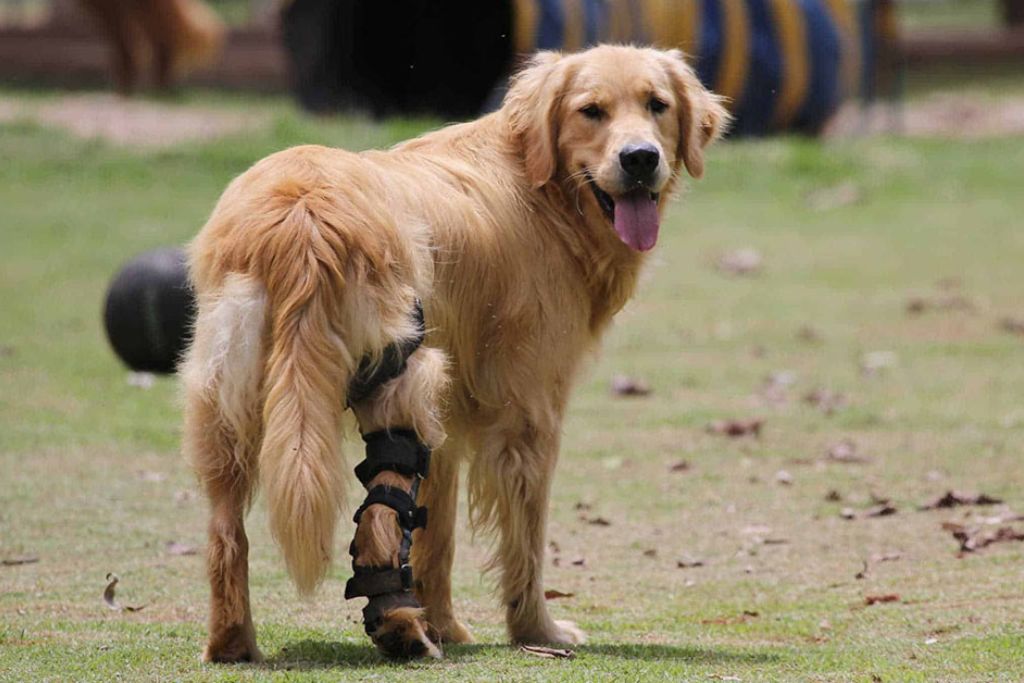
Top 5 Tips to Help Your Dog’s ACL Surgery Recovery – One of the most common knee injuries is a torn ACL in dogs (Anterior Cruciate Ligament). This is not just a very painful injury, but it is also a known cause of knee arthritis in dogs, which is why various pet parents choose to have it surgically repaired. A complete torn ACL home treatment is as crucial to a good recovery as the surgery itself. If you find yourself in this situation, here is what you can expect from ACL surgery recovery in a dog.
In this blog, we will learn about what ACL surgery is and the tips to help your dog’s ACL surgery recovery.
What Is ACL Surgery?
Inside their knees, dogs have cruciate ligaments that help with stabilization. If your dog begins to limp on one hind leg, it is probably that they have torn the cranial cruciate ligament (CCL), which is very similar to the anterior cruciate ligament (ACL) in human beings. An imbalanced knee brings about inflammation and leads to pain, lack of mobility, and the development of arthritis at an early stage.
Acute knee ligament surgery in dogs is done to stabilize the knee to lessen pain, and decrease arthritis formation in the knee. Many varieties of surgical repair of ACLs are used in dogs, and some of them can be performed by only the board-certified veterinary surgeon. Your veterinarian will suggest what is best for your dog.
Top 5 Tips for Dog ACL Surgery Recovery
Helping your dog cruciate ligament surgery recovery time is as essential to successful healing as the actual surgery. Generally, ACL surgery recovery for dogs takes approximately six months. Throughout this dog ACL surgery recovery time, it is important to keep the following action terms in mind:
1. Restrict Exercise
Restricting your dog’s movements is important for dog recovery from ACL surgery. You will likely get a lot of pages of discharge directions and instructions from your surgeon that give you tips, some of which may include:
- Rest as much as feasible following surgery for a minimum of four weeks.
- Leased walking for only 10 to 15 minutes and for bathroom breaks only.
- No running, jumping, or climbing on the stairs.
- Some of the dogs may need support to get up. You can leverage a towel as a sling under your dog’s belly to help them stand up.
- Increase walking minutes by adding 5 minutes after 4 weeks. Also, remember to keep your dog away from stairs or hills.
- Increasing walk time to 30 minutes after six weeks, and include gentle inclines, still no running, jumping, or unleashed walks.
Management of exercise restriction will be decided by regular checkup appointments after surgery to evaluate how your dog’s knee is healing. In case your puppy is recovering quickly, it can start their activity sooner. Conversely, when your dog is taking a longer time to heal, your veterinarian might advise you to proceed at a slower pace to attempt to reduce the chances of post-surgery complications. Otherwise, your vet will advise on the correct way of introducing more exercise to your dog, include into daily routine. When you can hardly contain your dog during the recovery process, request your veterinarian to prescribe some tranquilizers or anti-stress drugs.
2. Monitor Implants
All ACL surgeries need some sort of implant in the knee, and it is crucial to observe your dog’s surgical part for any signs of implant complications. Here are the signs that show there is a complication, including extra swelling, redness, pain, heat, and discharge of fluid from the surgical site.
Dogs are generally sent home with a bandage after surgery to offer compression and support to the knee. It is also essential that they wear an E-collar at all times to protect them from licking the surgical area.
3. Keep All Regular Appointments
Your dog wants to visit your vet so that your dog can be checked regularly, usually after surgery, 2 weeks, 4 weeks, and 8 weeks after the operation. During these appointments, your vet will examine the surgical site, ask questions about the health of your dog, remove stitches or staples, and take frequent X-rays to ensure that the knee is healing properly. Remember to do all your follow-ups with your dog in order to guarantee successful healing and work back.
4. Address Medications for Pain Control
Your vet will prescribe pain medications that can include non-steroidal anti-inflammatories. You can offer your dog extra comfort by using cold compresses on the knee quickly following surgery to lower swelling, and by making sure your dog has a thick orthopedic bed to rest and recover on.
5. Manage their Nutritional Needs
Excess weight is a well-known risk for causing ACL tears in dogs. Furthermore, there is not a rare case when dogs that suffer an ACL tear in one knee end up developing the same condition in the other. Talk to your vet about the amount of food to give your dog when it is recovering. In addition, dogs that have a torn ACL have an increased risk of developing arthritis of the affected joint after having the joint repaired. Providing a food that can balance both weight and provide joint support is an amazing way to support your dog nutritionally while also helping protect their remaining healthy knee.
Conclusion
To recover successfully with a torn ACL in a dog, it is important to follow all the instructions of your vet in the case of home treatment. At Pet Care Partners, we guide pet owners through every stage of post-surgical care to ensure a smooth dog ACL recovery. Get prepared to ensure that your investment in the surgery is safe and your dog has the best opportunity at making a full dog ACL repair recovery by being aware of what to expect after having ACL surgery for dog.
FAQs
How long does it take to recover a dog from ACL surgery?
Recovery for ACL surgery in dogs is often seen in 4 to 6 weeks. Also, due to the differences in dogs’ breeds, sizes, predisposition to some diseases and injuries, as well as the difference in seriousness of torn cruciate ligaments, the exact recovery time from an ACL surgery in small dogs or large dogs differs.
When can my dog do normal activity after ACL surgery?
Even though it depends on a case-by-case basis, the commonly accepted rest time is approximately 10 to 15 weeks before strict crate resting can be reduced to enable your dog ACL brace to move around and do things normally.
Can I leave my dog alone at home after ACL surgery?
No. You should not leave your dog alone at home after surgery. It is essential to observe them for complications.
How to lift a dog after ACL surgery or can I pick my dog up after surgery?
While you can pick up your dog after surgery, most vets will suggest against this until after a few hours or days after the surgery. This is done to make sure that the surgical area has started to settle and will not easily open or get infected.