
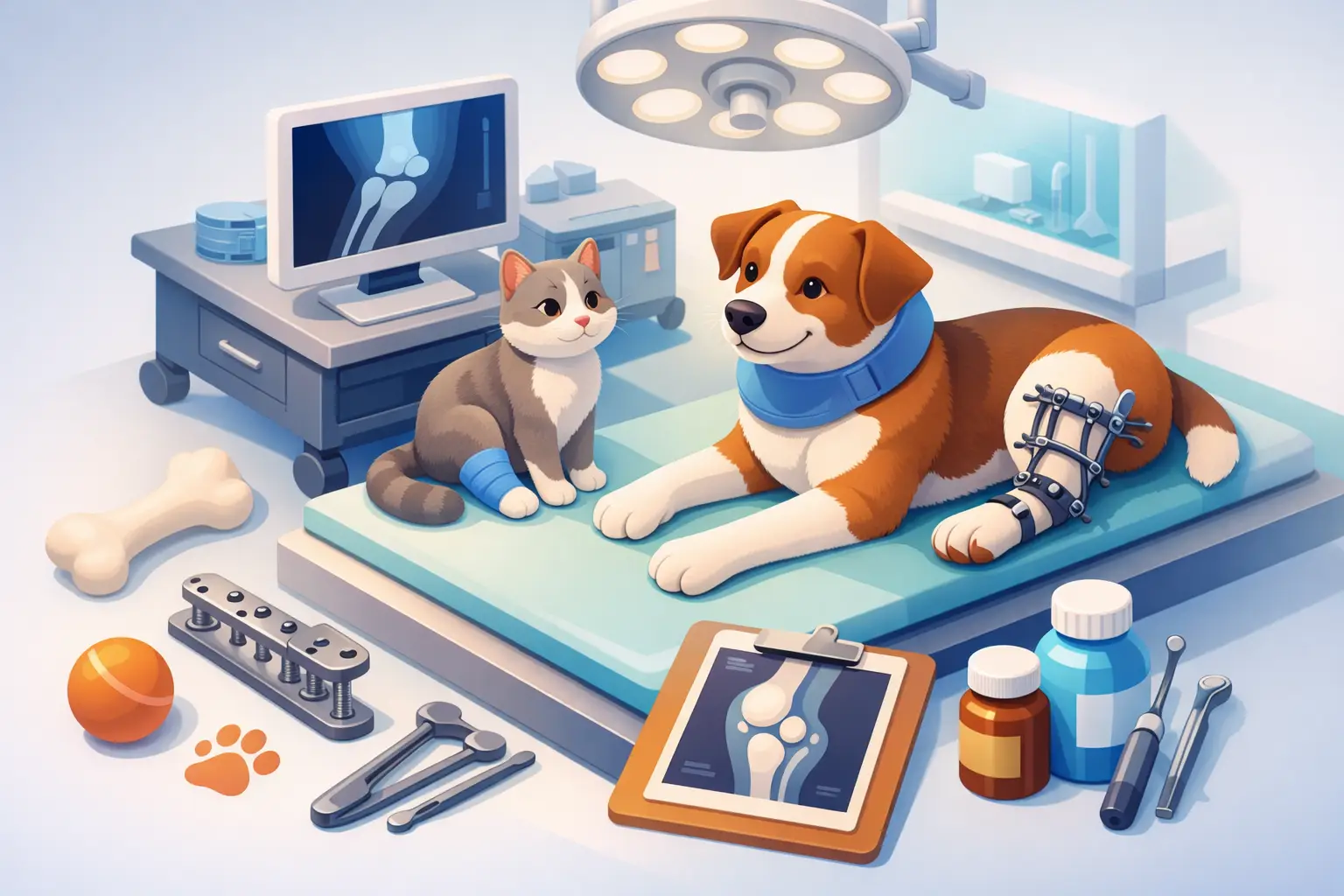
When your dog stops putting weight on a leg or your cat starts hiding after a bad jump, the problem can turn serious fast. In those moments, many families ask the same question: is affordable orthopedic surgery for pets actually possible without sacrificing quality care? The answer is often yes, but the path depends on the injury, the pet’s overall health, and whether your veterinary team can guide you from diagnosis through recovery in one place.
Orthopedic surgery covers injuries and conditions involving bones, joints, ligaments, and the structures that support movement. For pets, that can mean anything from a torn cranial cruciate ligament in a dog’s knee to a fracture after a fall or car accident. Some cases are urgent. Others can be planned. Either way, cost matters, and so does getting the treatment right the first time.
What affordable orthopedic surgery for pets really means
Affordable does not mean basic or rushed. It means building a treatment plan around what your pet medically needs while avoiding unnecessary delays, repeat visits, or fragmented care that can increase both stress and total expense.
A low price by itself is not the whole story. If a pet needs advanced imaging, anesthesia, surgery, pain management, and rehabilitation, those pieces work together. When care is disconnected across multiple providers, owners can end up paying more in repeat exams, duplicate diagnostics, or transportation between facilities. Affordable care is often about efficiency, good planning, and access to the right services at the right time.
This is especially important with orthopedic problems because waiting too long can make some conditions worse. A simple fracture may become harder to repair if healing starts in the wrong position. A ligament injury can lead to more joint instability and arthritis over time. Saving money matters, but delaying necessary treatment can sometimes raise the overall cost later.
Common surgeries and what affects price
Orthopedic procedures vary widely in complexity. A straightforward fracture repair is different from surgery for a torn ligament or a hip issue in an older dog. The biggest cost drivers are usually the diagnosis, the type of procedure, anesthesia time, implants or hardware, hospitalization, and aftercare.
A pet with a limp may need an exam and X-rays only. Another may need more advanced imaging to confirm the injury and plan surgery safely. The size of your pet also matters because larger dogs often require more medication, larger implants, and more physical support during recovery.
Some orthopedic surgeries involve plates, pins, screws, or other fixation devices. These materials are necessary for many fracture repairs, but they add to the total cost. Post-operative pain control, follow-up imaging, bandage changes, and rehabilitation can also be part of the full picture. When you compare estimates, ask whether aftercare is included or billed separately.
Why diagnosis and surgical planning matter so much
One of the best ways to keep treatment cost-effective is to get a clear diagnosis early. Limping does not always mean surgery. Some pets have soft tissue injuries that improve with strict rest, medication, and monitored follow-up. Others need prompt surgical stabilization.
That is why a careful exam matters. Your veterinarian is looking at gait, pain response, swelling, joint stability, and neurologic function, then matching those findings with imaging and your pet’s history. Good planning helps families avoid paying for treatment that is too aggressive for the condition or too conservative to solve it.
There is also an emotional side to this. Many owners feel pressure to make a decision quickly, especially if a pet is in pain. A dependable care team should explain what is urgent, what can wait a day or two, and where the trade-offs are. Not every case has only one acceptable path. Some do. Many have options.
How to evaluate affordable orthopedic surgery for pets
If you are comparing providers, focus on value rather than the lowest quoted number. Ask what the estimate includes, who performs the procedure, what diagnostics are recommended before surgery, and what the recovery plan will look like at home.
It also helps to ask how complications are handled. Orthopedic recovery can be smooth, but setbacks happen. Incisions can become irritated, activity restrictions can be difficult for energetic dogs, and some pets need rehabilitation to regain strength and function. Knowing that your care team can manage those issues without sending you elsewhere can make a real difference.
For many families, convenience is part of affordability too. When a provider offers exams, imaging, surgery, follow-up care, and rehabilitation support within the same network, it reduces the burden of coordinating everything yourself. That can mean fewer delays, clearer communication, and a more predictable experience.
When surgery is worth the cost
Not every pet with an orthopedic problem needs surgery, but when surgery is recommended, it is usually because the expected benefit is meaningful. The goal may be pain relief, restored stability, better healing, or improved long-term mobility.
For example, a displaced fracture often will not heal correctly with rest alone. A torn ligament in an active dog may lead to ongoing pain and poor function if the knee remains unstable. In these cases, surgery can reduce suffering and help prevent secondary problems.
There are still cases where the answer is less straightforward. A very senior pet with multiple health issues may not be the best candidate for a major orthopedic procedure. A smaller dog with a mild injury may do well with conservative management first. This is where a veterinarian’s judgment matters. Affordable care should never mean pushing surgery when another safe option could work.
Recovery is part of the cost and the outcome
Orthopedic surgery does not end when your pet goes home. Recovery is a major part of success, and families should plan for it from the start. That includes medications, restricted activity, recheck appointments, and sometimes rehabilitation.
Rehab can be especially helpful after orthopedic procedures because it supports healing while improving strength, coordination, and comfort. Some pets benefit from guided exercises, therapeutic modalities, or monitored return-to-activity plans. While rehab adds a line item to the budget, it may also help protect the value of the surgery by supporting a stronger recovery.
At home, owners should expect some routine changes. You may need to carry a small dog outside, use a sling for support, block access to stairs, or keep an active pet confined for several weeks. Those demands are temporary, but they are real. The more prepared you are, the smoother the recovery tends to be.
Questions to ask before moving forward
A good orthopedic conversation should leave you feeling informed, not pressured. Ask what the diagnosis is, whether surgery is definitely required, what outcomes are realistic, and what the timeline looks like if you proceed now versus later.
You should also ask about pain control, anesthesia monitoring, follow-up visits, and the chances that your pet will return to normal activity. Some pets regain excellent function. Others improve significantly but may still have some stiffness or long-term arthritis. Clear expectations help families make decisions they can feel confident about.
If budget is a concern, say so early. That is not something to be embarrassed about. Cost-sensitive planning is part of responsible pet care. Your veterinary team may be able to prioritize diagnostics, outline phased treatment options when medically appropriate, or explain which parts of care are essential and which depend on how your pet responds.
Choosing a care team you can stay with
Orthopedic problems can start suddenly, but they rarely end in a single visit. You need a team that can assess the injury, explain the options, perform treatment safely, and stay involved through recovery. That continuity can lower stress for both pets and owners.
For families in Southern California, that often means looking for a provider with broad capabilities, responsive scheduling, and support that extends beyond the operating room. Pet Care Partners is built around that kind of connected care, helping pet owners access diagnostics, surgery, follow-up, and rehabilitation with a practical focus on quality and affordability.
If your pet is limping, crying out, refusing stairs, or struggling to bear weight, it is worth getting answers sooner rather than later. The most helpful next step is not guessing whether surgery will be needed. It is having your pet examined by a veterinary team that can explain what is wrong, what it will take to fix it, and how to make the process manageable for your family.