
Before and After TPLO Surgery: Dog Health and Recovery Timeline – Discovering that your dog may need surgery can be alarming for many reasons, especially a surgery like TPLO. If your dog has a torn cranial cruciate ligament (CCL), having surgery is often the best route to getting your dog back to walking, running, and playing again without pain. TPLO (Tibial Plateau Leveling Osteotomy) is one of the most common and successful orthopedic surgeries performed on dogs. Knowing what will happen during TPL0 surgery preparation and post-operatively will help make the experience easier for both the owner and the patient.
Step by step, we will unwrap the experience, so you have a good sense of what to expect and how you can be instrumental in your dog’s healing process.
Before TPLO Surgery: Preparation
There is a lot that you can do to prepare ahead of time that may help improve your dog’s comfort and recovery from surgery.
1. Diagnosis and Discussion
Most dogs go on to need TPLO surgery after an injury to their CCL/ACL, which is similar to an injury to a human ACL. Your veterinarian or orthopedist will confirm the injury through an examination and x-rays. Once TPLO surgery is recommended, they will review the process of the surgery, the cost, and what the recovery will entail.
2. Pre-operative Health Assessment
Before undergoing surgery, your veterinarian will conduct bloodwork and perhaps some other tests to determine whether your dog is healthy enough for anesthesia. They may also prescribe an anti-inflammatory or pain medication to help keep your dog comfortable, leading up to the surgery.
3. Preparing Your Home
It is a good idea to establish a safe, quiet recovery space for your dog before surgery. For example:
- A nice soft bed or supportive bed in a smaller sectioned area, like a gated room or a large crate.
- Non-slip, grippy rugs or mats.
- Consider a sling or harness to assist your dog in going outside to potty.
This space is going to be very necessary when your TPLO surgery dog returns and requires strict rest!
4. The Day of Surgery
Expect that your veterinarian team may ask for both food and water to be withheld for 10-12 hours before surgery. Then, drop your dog off comfortable and calm, with peace of mind in knowing that the veterinary team will allow for pre-anesthetic care, IV fluids, and care, and monitor your dog throughout the surgical procedure.
What Happens During TPLO Surgery
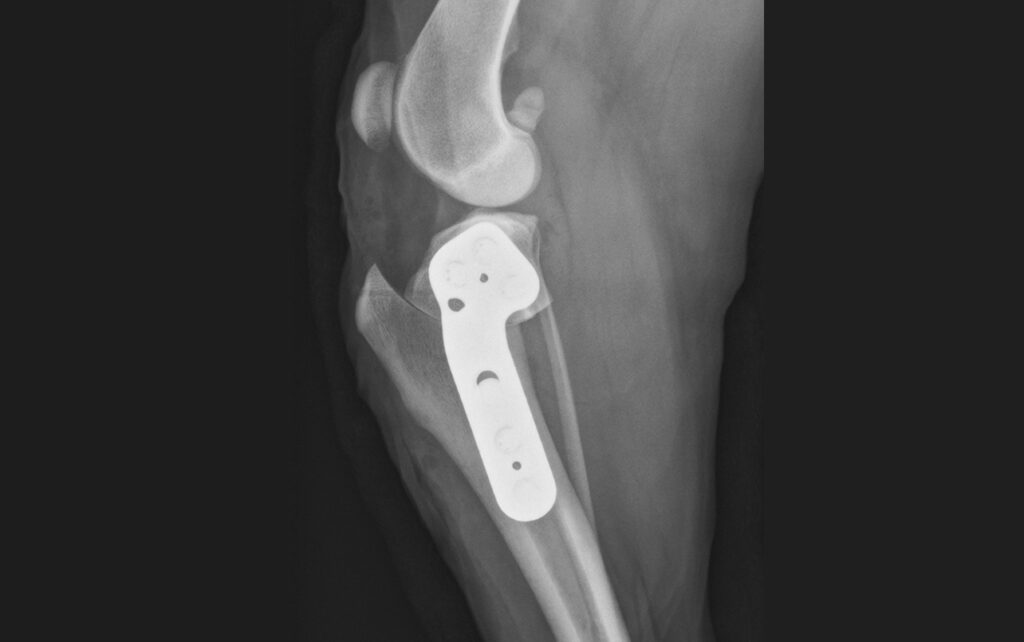
With canine TPLO surgery, the surgeon alters the angle of your dog’s tibia (the shin bone) so that the knee can still stabilize and function without depending on the torn ligament. In brief:
- An incision is made and opened near the knee
- The tibial plateau is cut and rotated to the right angle.
- A metal plate and screws are used to hold it in place.
- The incision is closed and bandaged.
The procedure typically lasts about two hours. Afterward, your dog is closely monitored as they recover from anesthesia.
TPLO Surgery Recovery Timeline
Every dog heals differently, but the timeline below provides a general overview of what you can expect during your dog’s recovery from TPLO surgery.
Days 1-2: Rest and Pain Control
- When you first bring your dog home, expect them to be tired and a little unsteady.
- The first 48 hours focus on rest and pain control.
- Keep your dog confined and calm.
- Apply cold compresses to reduce swelling.
- Take them outside using a sling or harness. No walking without assistance yet.
- Be sure to follow your vet’s prescribed medication and schedule.
Your vet may recommend an Elizabethan collar (cone) for your dog’s hygiene to stop them from licking or chewing the incision.
Weeks 1-2: Strict Rest
For the first 2 weeks, it is critical to a successful TPLO surgery dog recovery. For the first 2 weeks, your dog should only go outside to relieve themselves. Their time outside should be short. For the remainder of the time, your dog should be resting. You will be scheduled for a follow-up appointment in approximately 10-14 days to evaluate the incision and possibly remove sutures or staples. Be aware of the following:
- Redness, swelling, or discharge from the incision
- Excessive licking
- Limping that is getting worse or is not improving
If you notice any of the above, contact your veterinarian immediately.
Weeks 3-6: Controlled Movement
Once your dog is healed, you can gradually reintroduce light and controlled movement. This phase is about light and controlled exercises. Start with 5-minute leash walks on a level surface, a few times each day. During this phase, we are still avoiding stairs, but have leash walks, no running or jumping yet. Your veterinarian may teach you simple rehab exercises like:
- Sit-to-stand movements
- Gentle weight-shifting
- Short leash walks
Think of any rehab exercises your veterinary professional teaches as a slow physical therapy – the important part is slow and steady, slow and steady is the best way to build strength without re-injury.
Week 7-12: Building Strength
Weeks 7-12 are when your dog’s recovery from TPLO surgery starts to show results. Your dog should be walking a bit more confidently, still on-leash, the whole time. Your veterinarian might also take new X-rays at this point to look for bone healing. If all goes well, the plan is to slowly increase your dog walking distance and incorporate some mild hills and uneven surfaces (with current weather considerations). Hydrotherapy can be very beneficial at any time post-surgery – it provides a unique opportunity for dogs to begin building muscle while minimizing stress on the healing surgical site.
3-6 Months: Back to Normal Life
By this time, most dogs are feeling much more like themselves. You will likely see improvements in muscle tone, and the surgical leg will get stronger weekly. By six months, most dogs can get back to normal activity, such as running, hiking, or playing fetch, if the veterinarian gives approval. At this point, many dogs regain full mobility and continue to live active lives without pain after canine TPLO surgery.
Ways to Ensure a Successful Recovery
Adhere to the advised plan. Follow your vet’s suggestions for rest, medication, and exercise.
Monitor your dog’s weight. Carrying extra pounds places more pressure on the healing knee.
Non-slip flooring will be helpful. Carpeting, rugs, or yoga mats will help keep them from slipping.
Be patient. It will be tempting to let your dog play when he/she starts feeling better; however, too much too soon can lead to setbacks.
Consider supplements. You can ask your vet about glucosamine, chondroitin, fish oil, etc., for the long-term health of your dog’s joints.
Final Thoughts
Watching your dog go through rehabilitation after surgery is not easy, but the results are worth it. Giving your dog the proper care takes time, but dogs have a wonderful way of healing and returning to full, happy, pain-free lives post TPLO surgery. The road may feel long, but every step from preparing for surgery to having happy running months later gets your dog closer to feeling like themselves. At Pet Care Partners, we support pet owners through every stage of the TPLO recovery journey to ensure the best possible outcome for their dogs
FAQ About Dog TPLO Surgery
How long does it take for a dog to recover from TPLO surgery?
Most dogs will heal in 12-16 weeks, but may take up to 6 months to regain strength and mobility. Progress may feel slow, but with patience and care, most dogs recover nicely.
Can I walk my dog right after TPLO surgery?
Yes, your dog can walk directly after surgery, but only outside for short supervised potty breaks while on a leash or in a sling. Even though they may want to move more, it is important to keep them calm and restricted for recovery. Too much activity too soon could slow down your dog’s recovery.
How can I help my dog recover faster from TPLO surgery?
Follow your veterinarian’s instructions, ensure your dog is rested and safe, and provide a restricted environment by eliminating stairs and jumping if possible – think non-slip rugs or platforms. Gentle rehab along with love, patience, and consistency can go a long way.
Is TPLO surgery worth it for dogs?
Yes! TPLO surgery is an excellent surgery for dogs and is safe, with a very high success rate that will allow your dog to return to being active and pain-free. It is a big process, but seeing your dog happy and normal again makes it all worth it.