
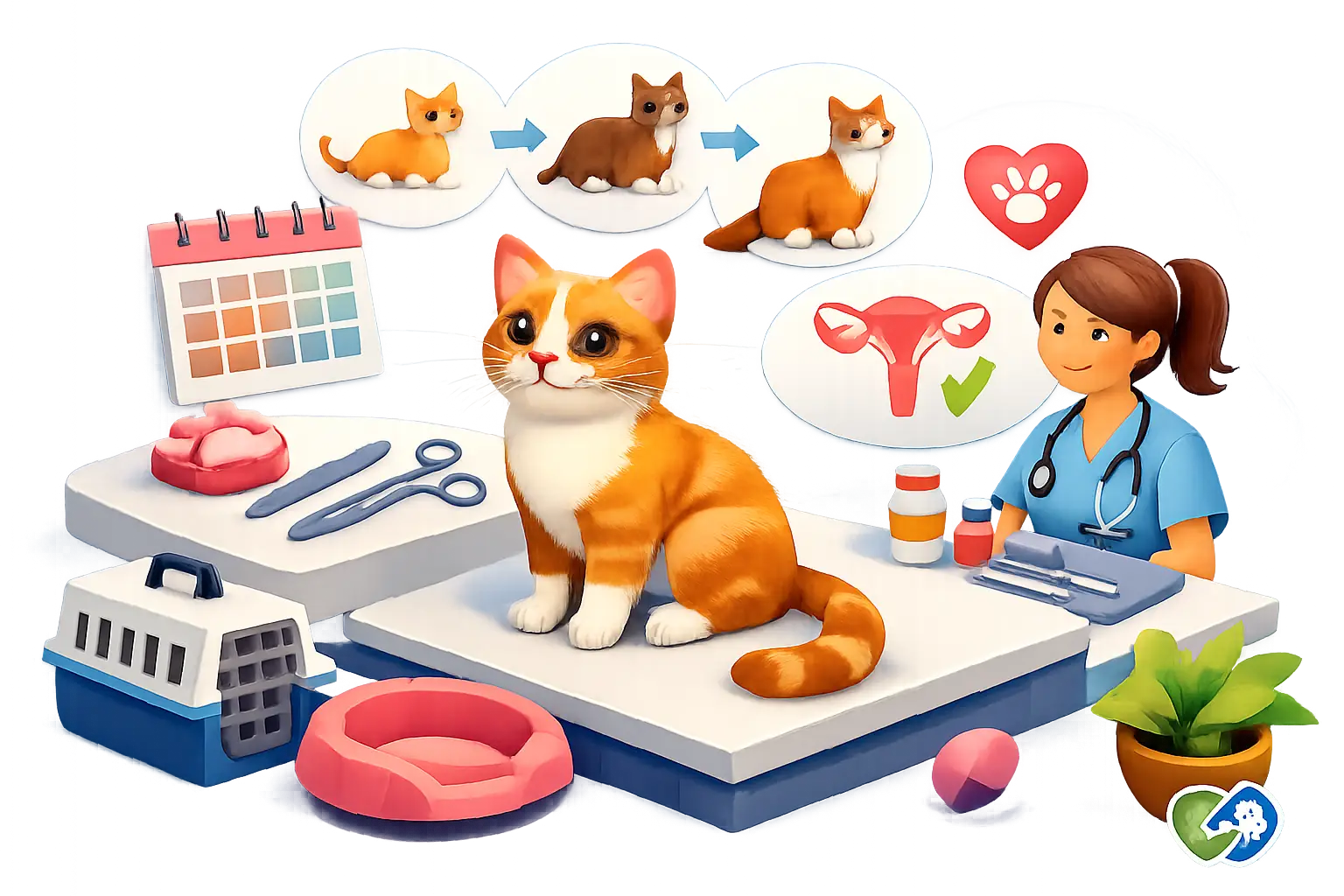
If your kitten is growing fast and suddenly acting more vocal, restless, or eager to slip out the door, the question of the best age to spay a cat stops feeling theoretical. It becomes a real medical decision, and one that many pet owners want to get right the first time.
For most cats, veterinarians recommend spaying before the first heat cycle, often around 4 to 6 months of age. That general window works well for many healthy kittens, but it is not a one-size-fits-all rule. Your cat’s age, weight, overall health, breed, medical history, and home environment can all affect the safest and most practical timing.
What is the best age to spay a cat?
In many cases, the best age to spay a cat is before she goes into heat for the first time. Spaying at this stage helps prevent unwanted pregnancy and lowers the risk of certain reproductive diseases later in life. It can also reduce behaviors linked to heat, such as loud vocalizing, urine marking, restlessness, and attempts to escape outdoors.
Many veterinary teams are comfortable performing spay surgery once a kitten is healthy, developing normally, and has reached an appropriate body weight. That often happens around 4 to 6 months. Some cats may be spayed earlier in shelter or rescue settings, while others may benefit from waiting a bit longer if there are health concerns or special circumstances.
The key point is this: earlier planning usually leads to better timing. If you wait until your cat is already showing signs of heat, scheduling can become more stressful and surgery may be delayed.
Why timing matters
Spaying is not only about preventing litters. It is also preventive healthcare.
When a cat is spayed before her first heat, the surgery removes the ovaries and usually the uterus before repeated hormonal cycling begins. That matters because every heat cycle brings hormonal changes and the possibility of pregnancy. Cats can become pregnant very young, and many owners are surprised by how early fertility starts.
There is also the issue of pyometra, a serious and potentially life-threatening uterine infection that affects unspayed females. Spaying removes that risk. It also eliminates the chance of ovarian and uterine disease later on.
From a household standpoint, timing matters because a cat in heat can be difficult for families to manage. Some cats become unusually vocal at night. Others pace, posture, spray urine, or become determined to get outside. For busy families, especially those with children or multiple pets, preventing that cycle before it starts can make life much easier.
Best age to spay a cat by life stage
Kittens under 4 months
Some shelters and high-volume spay programs perform pediatric spays before 4 months, especially to make sure kittens are adopted out already altered. These surgeries can be safe in the right hands, but they require careful anesthesia, temperature support, and monitoring.
For privately owned cats, many family veterinarians prefer to assess the individual kitten rather than rely on age alone. If a kitten is very small, underweight, or recovering from illness, it may be better to wait until she is stronger.
Around 4 to 6 months
This is the age range many veterinarians consider ideal for routine spaying in healthy cats. At this stage, kittens are often large enough for surgery, resilient in recovery, and still young enough that the procedure can happen before the first heat.
This window also gives pet owners time to complete a wellness exam, ask questions about anesthesia and pain management, and plan for recovery without rushing.
Older than 6 months
If your cat is older and has not yet been spayed, it is usually still worth doing. Adult cats can be safely spayed, although the surgical plan may vary a bit if the cat is overweight, in heat, pregnant, or has underlying medical issues.
The surgery is still beneficial, even if the ideal preventive window has passed. Spaying an adult cat helps prevent future pregnancy and protects against serious uterine disease.
When a vet may recommend adjusting the timing
The best answer is sometimes not the standard answer. A veterinarian may recommend moving the procedure earlier or later depending on what your cat needs medically.
If your kitten has an upper respiratory infection, parasites, poor growth, or another illness, your veterinarian may want to treat that first. Surgery is safest when a cat is stable and healthy.
If your cat has already gone into heat, your veterinary team may still be able to perform the spay, but they may discuss whether it makes sense to wait until the cycle ends. Cats in heat have increased blood flow to the reproductive tract, which can make surgery a bit more complex.
If there is any chance your cat is pregnant, timing becomes even more important. A veterinary exam can help determine the next step.
Breed and body size can matter too, though generally less than in dogs. The more important factors are physical condition, reproductive status, and overall health.
Common concerns pet owners have
Many families worry that spaying too early will harm growth or change their cat’s personality. In most healthy cats, that concern is not supported by everyday veterinary experience. Spaying does not take away a cat’s identity. What it often changes are hormone-driven behaviors tied to heat and reproduction.
Another common worry is weight gain. Spayed cats can gain weight more easily if calorie intake stays too high and activity drops, but the surgery itself is not the whole story. Weight management depends on portion control, diet quality, enrichment, and routine wellness care.
Some owners also assume they should let a cat have one heat cycle or one litter first. Medically, there is usually no benefit to doing that. In fact, waiting increases the chance of pregnancy and prolongs exposure to reproductive hormones.
How to know your cat is ready
A pre-surgical exam is the best way to answer this. Your veterinarian will check your cat’s heart and lungs, hydration, body condition, and overall health. They may also recommend bloodwork depending on age, history, and the hospital’s protocol.
You can help by watching for practical signs at home. Your cat should be eating normally, acting alert, free from vomiting or diarrhea, and recovering well from any recent illness. If she has started showing heat behaviors, mention that when you schedule the appointment.
For first-time cat owners, this part matters. A quick phone call can save time and prevent delays if your cat needs an exam before surgery day.
What recovery usually looks like
Most cats recover very well from spay surgery, especially when they are young and healthy. Many are sleepy the first evening and back to much of their normal routine within a day or two. Full healing takes longer, and activity restriction still matters even if your cat seems to feel fine.
Your veterinary team will give instructions for food, pain medication, incision checks, and limiting jumping or rough play. An e-collar or recovery suit may be needed if your cat wants to lick the incision.
It helps to prepare a quiet recovery space ahead of time. Keep the litter box, food, and water easy to reach, and avoid letting children or other pets disturb her while she rests.
A practical note for busy families
The best age to spay a cat is partly a medical question and partly a planning question. If your household runs on work schedules, school pickups, and weekend errands, it is smart to book early rather than wait for obvious heat signs. Appointment availability can change quickly, and delaying by a few weeks can make a bigger difference than many owners expect.
For families in Southern California who want affordable veterinary care and guidance across routine wellness, surgery, and recovery, having one trusted care team makes this process much easier. You do not have to sort through it alone or guess whether your cat is at the right stage.
The right time to spay is usually before problems start, while your cat is healthy, growing well, and easy to support through recovery. If you are unsure, ask sooner than feels necessary. That conversation is often what helps you make the safest choice with confidence.