
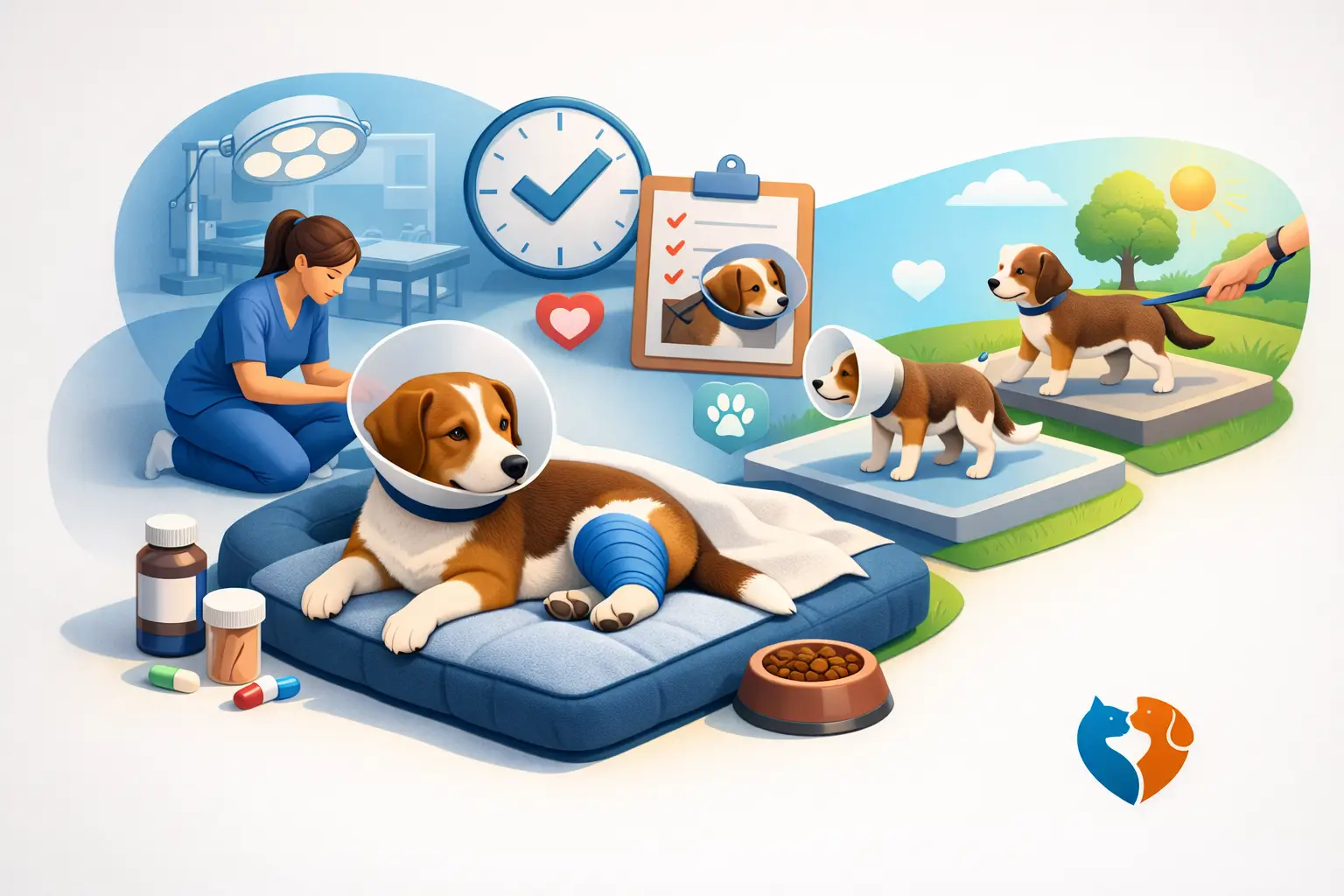
The first night after surgery is usually the hardest on pet owners. Your dog may seem sleepy, restless, less interested in food, or not quite like themselves yet. A clear dog surgery recovery timeline can make that first evening feel less uncertain and help you tell the difference between normal healing and signs your dog needs veterinary attention.
Recovery is not identical for every dog. Age, breed, the type of procedure, pain control, activity level, and any underlying health conditions all affect how quickly healing moves. A routine spay and a complex orthopedic surgery do not follow the same path, so the most accurate instructions will always come from your veterinarian. Still, most recoveries follow a predictable pattern.
Dog surgery recovery timeline: what to expect
The first 24 hours are mostly about rest, monitoring, and keeping your dog comfortable. Many dogs are groggy from anesthesia and may sleep more than usual. Some whine, pace, or seem clingy as the medications wear off. Mild nausea, a reduced appetite, and a little coughing after a breathing tube can happen, but these signs should improve rather than worsen.
This is also the time when incision care starts. You may notice a small amount of redness or swelling around the surgical site, but it should not look angry, have a bad odor, or produce thick discharge. If your dog tries to lick or chew the area, that can create setbacks fast. An e-collar or recovery cone may not be your dog’s favorite accessory, but it protects the repair.
Days 2 to 3
By the second and third day, many dogs act like they feel much better than they actually are. That can be misleading. Energy often returns before tissue strength does, which is why activity restriction matters so much. Even if your dog wants to run, jump on the couch, or roughhouse with another pet, the body is still in an early healing phase.
Pain should be manageable with prescribed medication. Your dog may still be quieter than usual, but they should generally be eating, drinking, and going to the bathroom with less difficulty. Some bruising can appear around the incision during this window, especially after abdominal procedures, and mild swelling may still be normal. What you do not want to see is increasing redness, opening of the incision, bleeding, vomiting that continues, or signs that your dog cannot get comfortable.
Days 4 to 7
This part of the dog surgery recovery timeline often feels deceptively calm. The incision may look better on the surface, and your dog may seem almost back to normal. Internally, though, healing is still fragile. For soft tissue procedures, this is often when families start to relax too soon, and that is when a dog pulls stitches, develops swelling, or re-injures the site.
Most dogs should have a more normal appetite and stable energy by now. You should continue giving medications exactly as directed, even if your dog looks fine. Stopping pain medication or antibiotics early without veterinary guidance can slow recovery or increase complications.
The 1 to 2 week recovery period
For many common procedures, the first 10 to 14 days are the key window for incision healing. This is often when sutures or staples are checked or removed, depending on the surgery and the materials used. During this period, leash walks for bathroom breaks are usually allowed, but free running, stairs, jumping, and play are often restricted.
If your dog had a spay, neuter, lump removal, dental procedure with extractions, or another non-orthopedic surgery, this may be the stage when your veterinarian begins to clear a gradual return to normal routine. That said, healing on the outside is only part of the picture. Internal healing can continue beyond what you can see.
For dogs recovering from orthopedic procedures such as cruciate ligament surgery, fracture repair, or patella surgery, two weeks is still early. These dogs often need a much longer period of structured restriction and a carefully planned return to activity. Rehabilitation can make a meaningful difference here, especially when strength, joint motion, and safe movement patterns need to be rebuilt over time.
What normal healing looks like
A normal incision usually stays closed, dry, and only mildly pink. The surrounding skin may look a little raised or bruised at first, then gradually settle down. Your dog should be comfortable enough to rest, eat, and sleep, even if they are not completely themselves yet.
Behavior matters too. Mild tiredness is common, but your dog should not seem progressively weaker, more painful, or mentally dull as days go on. Healing should trend in the right direction, even if it is not perfectly linear.
Weeks 3 to 6 and beyond
Longer recoveries depend heavily on the procedure. Soft tissue surgeries may be mostly healed by this point, with activity reintroduced gradually based on your veterinarian’s guidance. Orthopedic surgeries often require several more weeks of limited activity, recheck imaging, and formal rehab exercises.
This is where patience really pays off. A dog that feels better can still be vulnerable to setbacks if they return to full activity too soon. One jump off a bed or one hard sprint in the yard can undo careful progress. For active dogs and younger dogs, this can be the hardest phase because their enthusiasm returns before their body is ready.
Senior dogs may need a slower ramp-up, especially if arthritis, muscle loss, or other chronic issues affect mobility. In those cases, recovery is not just about the incision healing. It is also about rebuilding comfort and confidence with movement.
Factors that can change a dog surgery recovery timeline
The procedure itself is the biggest factor. A routine surgery may involve days to two weeks of close management, while bone and joint surgeries can require several months of controlled recovery. Age also matters. Young, healthy dogs often heal faster, but they can be more likely to overdo it. Older dogs may heal more slowly and need extra support for mobility and pain control.
Body condition, chronic disease, and infection risk all affect healing too. A dog with diabetes, Cushing’s disease, skin allergies, or excess weight may need closer monitoring. Location of the surgery matters as well. Incisions near joints or high-motion areas can be more challenging because movement puts more stress on the tissues.
Home setup also plays a role. Recovery tends to go more smoothly when dogs have a quiet, contained space, traction on slippery floors, and a family that can reliably manage medication schedules and exercise restrictions.
Warning signs that need a call to the vet
Some variation in recovery is normal, but a few red flags should never be brushed off. Call your veterinary team if your dog will not eat for more than a day, keeps vomiting, has diarrhea that is severe or persistent, seems unable to urinate, or shows pain that is not controlled by prescribed medication.
You should also reach out if the incision becomes more red, swollen, open, or starts draining pus or blood. A bad smell, hot skin, or a sudden lump under the incision can point to infection or a fluid pocket. Trouble breathing, collapse, pale gums, or extreme lethargy are urgent signs and should be treated as emergencies.
When families are unsure, they often worry about bothering the clinic. Please do not wait just because you are hoping something will pass. A quick question early can prevent a much bigger problem later.
How to support a smoother recovery at home
The best home care is usually simple and consistent. Keep the incision clean and dry unless your veterinarian tells you otherwise. Do not apply ointments, peroxide, or home remedies unless they were specifically recommended. Give every medication exactly as directed, and do not substitute human pain relievers, which can be dangerous for dogs.
Restrict activity even if your dog seems energetic. Use a leash for bathroom breaks, block furniture if needed, and keep your dog separated from pets that trigger play. If your dog hates the cone, ask about alternatives, but do not leave the incision unprotected just because they seem annoyed by it.
If your dog had orthopedic surgery or is struggling to get around, ask whether rehabilitation would help. Targeted rehab can improve strength, reduce stiffness, and support a safer return to normal movement. For families in Southern California who want coordinated follow-up after surgery, a connected care team can make recovery much less stressful.
Healing asks for patience from both dogs and the people who love them. Most dogs do very well after surgery when pain is managed, activity is controlled, and small changes are taken seriously. If something feels off, trust that instinct and check in. A little reassurance, or early treatment when needed, can protect the progress your dog has already made.