Most cats look perfectly fine right up until they are not. A cat can keep eating, sleeping, and acting mostly normal while dental disease, kidney changes, thyroid problems, or weight loss develop quietly in the background. That is why one of the most common questions we hear is, how often do cats need wellness exams?
For most cats, the answer is once a year during adulthood and every six months during the senior years. Kittens need visits more often because they grow quickly and have a vaccine schedule to complete. Still, there is no single calendar that fits every cat. Age, medical history, lifestyle, and even how stressful car rides are for your cat can all affect the best timing.
How often do cats need wellness exams at each life stage?
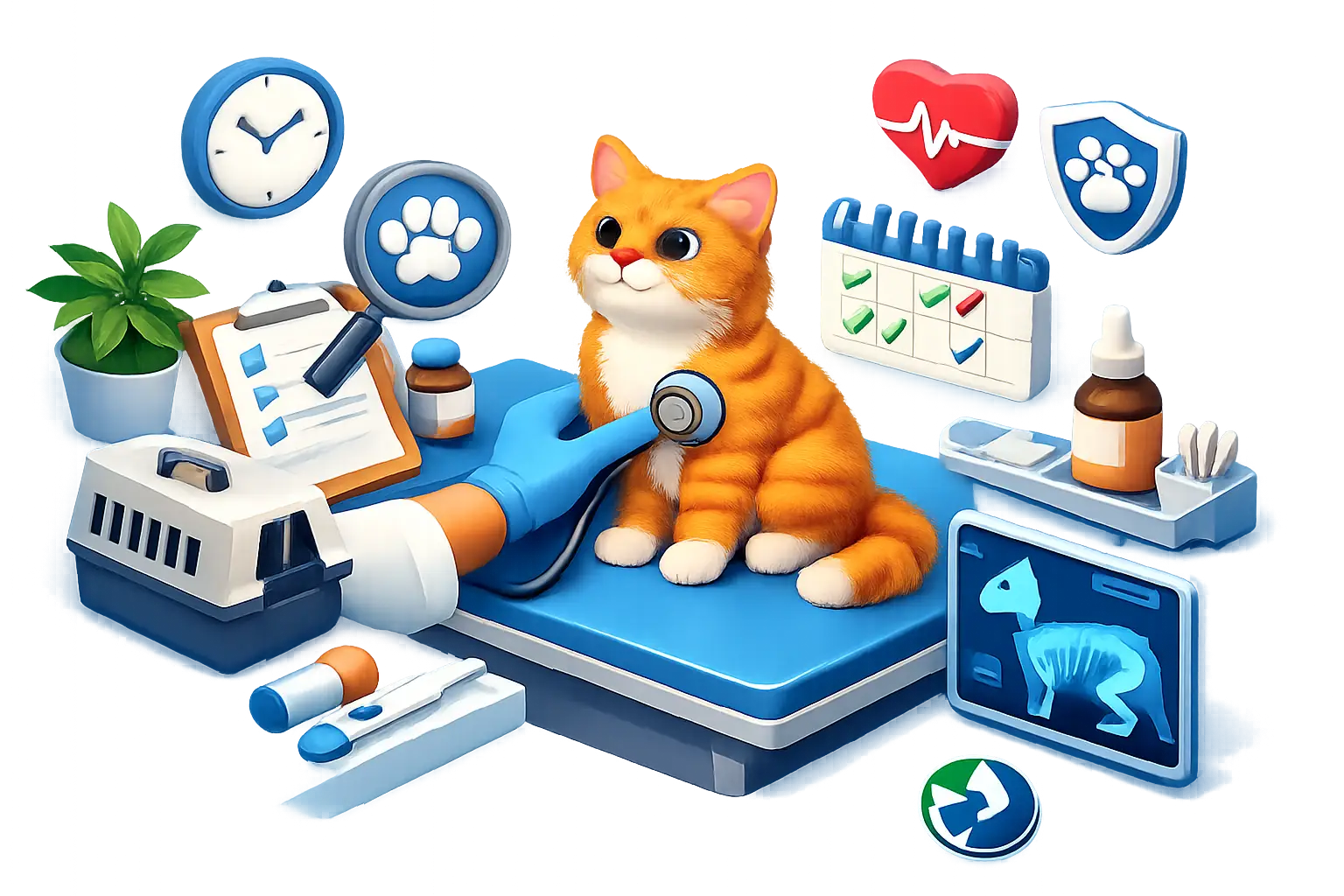
A wellness exam is not just a quick look over. It is your cat’s routine health check, where a veterinarian evaluates weight, body condition, heart and lungs, skin and coat, teeth and gums, eyes and ears, mobility, and any subtle changes that might point to early disease. Depending on age and risk, that visit may also include vaccines, parasite screening, bloodwork, or urine testing.
Kittens
Kittens usually need exams every three to four weeks until they are about 16 weeks old. Those early visits help your veterinary team track growth, complete core vaccines on schedule, check for intestinal parasites, and answer the practical questions that come up fast with a new pet. Nutrition, litter box habits, behavior, and spay or neuter timing often come up during this stage.
Because kittens change so quickly, spacing visits too far apart can mean missing a vaccine window or letting a small issue become a much bigger one. A mild upper respiratory infection, poor weight gain, or parasite problem can escalate faster in a young kitten than many owners expect.
Adult cats
Healthy adult cats usually need a wellness exam once a year. For many cats between about one and ten years old, that annual visit is the standard recommendation.
Yearly exams matter even for indoor cats. Indoor living lowers some risks, but it does not protect against everything. Cats kept indoors can still develop obesity, arthritis, dental disease, bladder issues, allergies, heart disease, or chronic digestive problems. Since cats are experts at hiding discomfort, a yearly exam gives your veterinarian the chance to compare today’s findings to last year’s and catch patterns early.
Senior cats
Most senior cats should be seen every six months. Many veterinarians begin recommending twice-yearly wellness exams around age 10, although some cats need closer monitoring even earlier.
That shorter interval matters because older cats can change quickly. Six months in a senior cat’s life is not the same as six months in a young adult’s life. Kidney disease, hyperthyroidism, diabetes, arthritis, high blood pressure, and cognitive changes can develop gradually but become much easier to manage when found early. A cat that seems simply “slower” at home may actually be dealing with pain or an internal medical issue.
Why regular wellness exams matter more than they seem
A lot of owners understandably think, “My cat seems normal, so we can probably wait.” The challenge is that cats often show illness in very quiet ways. They may jump a little less, groom less carefully, drink a bit more water, or become pickier with food. Those changes are easy to dismiss, especially in a busy household.
Wellness care creates a medical baseline. When your veterinarian knows your cat’s normal weight, heart rate, dental condition, and lab values, small shifts become easier to recognize. That can mean treating a manageable problem before it turns into an emergency visit.
There is also a financial side to preventive care. Routine exams and age-appropriate testing are usually more affordable than advanced treatment for a disease that was discovered late. For cost-conscious families, prevention often helps avoid bigger expenses and harder decisions later.
When your cat should be seen sooner than scheduled
Even if your cat had a recent exam, some changes should prompt an earlier visit. A wellness schedule is a foundation, not a rule that overrides symptoms.
Contact your veterinary team sooner if your cat starts drinking or urinating more, loses weight, vomits repeatedly, has diarrhea that does not resolve, stops eating, develops bad breath, hides more than usual, struggles to jump, or seems painful when touched. Changes in breathing, sudden lethargy, crying in the litter box, or any possible toxin exposure should be addressed promptly.
Behavior changes count too. Cats often express discomfort through irritability, withdrawal, litter box avoidance, or changes in sleep and grooming habits. If something feels off, it is worth asking. Trusting your instincts as a pet parent is part of good preventive care.
What happens during a cat wellness exam?
Knowing what to expect can make routine care feel more manageable. A cat wellness exam usually starts with a conversation about appetite, water intake, energy level, mobility, litter box habits, and any changes at home. That history matters because it adds context to what your veterinarian finds on the physical exam.
From there, your cat’s weight and body condition are checked carefully. Small gains and losses can be medically meaningful in cats. The veterinarian will listen to the heart and lungs, assess hydration, feel the abdomen, evaluate the skin and coat, look in the eyes and ears, and examine the mouth for tartar, gum inflammation, broken teeth, or pain.
Vaccines may be updated based on age, lifestyle, and risk. Not every cat needs the exact same vaccine plan every year, so this is one area where customization matters. Your veterinarian may also recommend fecal testing, parasite prevention, bloodwork, urinalysis, or blood pressure monitoring depending on your cat’s stage of life and health history.
Indoor cats still need regular exams
One of the most common misconceptions is that indoor cats do not need routine veterinary visits as often. It makes sense why people think that. Indoor cats are less likely to get into fights, pick up certain infections, or suffer trauma from cars or predators.
But indoor cats often face a different set of risks. Weight gain is common, especially in less active cats. Dental disease is extremely common regardless of lifestyle. Arthritis can affect cats that never step outside. So can kidney disease, diabetes, constipation, and stress-related urinary issues.
If your indoor cat hates the carrier or the car, the answer is not to skip care indefinitely. It is to work with a veterinary team that can help make visits less stressful and more efficient.
How wellness exam frequency changes for cats with health conditions
Some cats need to be seen more often than the general yearly or twice-yearly schedule. If your cat has diabetes, kidney disease, hyperthyroidism, heart disease, recurring ear infections, chronic vomiting, arthritis, or ongoing skin problems, regular rechecks are part of proper management.
That may mean every three to six months, sometimes more often when a condition is newly diagnosed or medications are being adjusted. It depends on how stable your cat is, what monitoring is needed, and whether symptoms are improving.
This is one reason having access to a full-service care team can make life easier. When exams, diagnostics, urgent care, and follow-up support are coordinated, pet owners spend less time piecing together care from multiple places and more time focusing on their cat.
Making routine visits easier for you and your cat
Many cat owners delay wellness care because the visit itself feels hard. The carrier is a battle. The car ride is noisy. The cat is upset for hours afterward. Those concerns are real, and they are worth planning around rather than ignoring.
Leave the carrier out at home between visits so it feels familiar instead of threatening. Add a soft towel and a favorite treat. Keep the car quiet and stable during the trip. If your cat is highly anxious, ask ahead about strategies that may help, including scheduling advice or calming options.
For busy families, it also helps to plan annual and senior wellness visits before they are overdue. Waiting until a problem appears usually means more stress, less flexibility, and sometimes a sicker pet.
The right schedule is preventive, not excessive
Some owners worry that regular exams are unnecessary if their cat seems healthy. Others fear they are not bringing their cat in enough. The right answer sits in the middle. Good wellness care is not about overdoing appointments. It is about matching the visit schedule to your cat’s age, health risks, and any changes you have noticed.
For most cats, that means frequent visits as a kitten, annual exams in adulthood, and exams every six months as a senior. If your cat has medical issues or subtle changes at home, sooner is better.
Your cat does not need to look sick to benefit from being seen. Often, the best wellness exam is the one that finds a problem before your cat has had to suffer through it alone.