
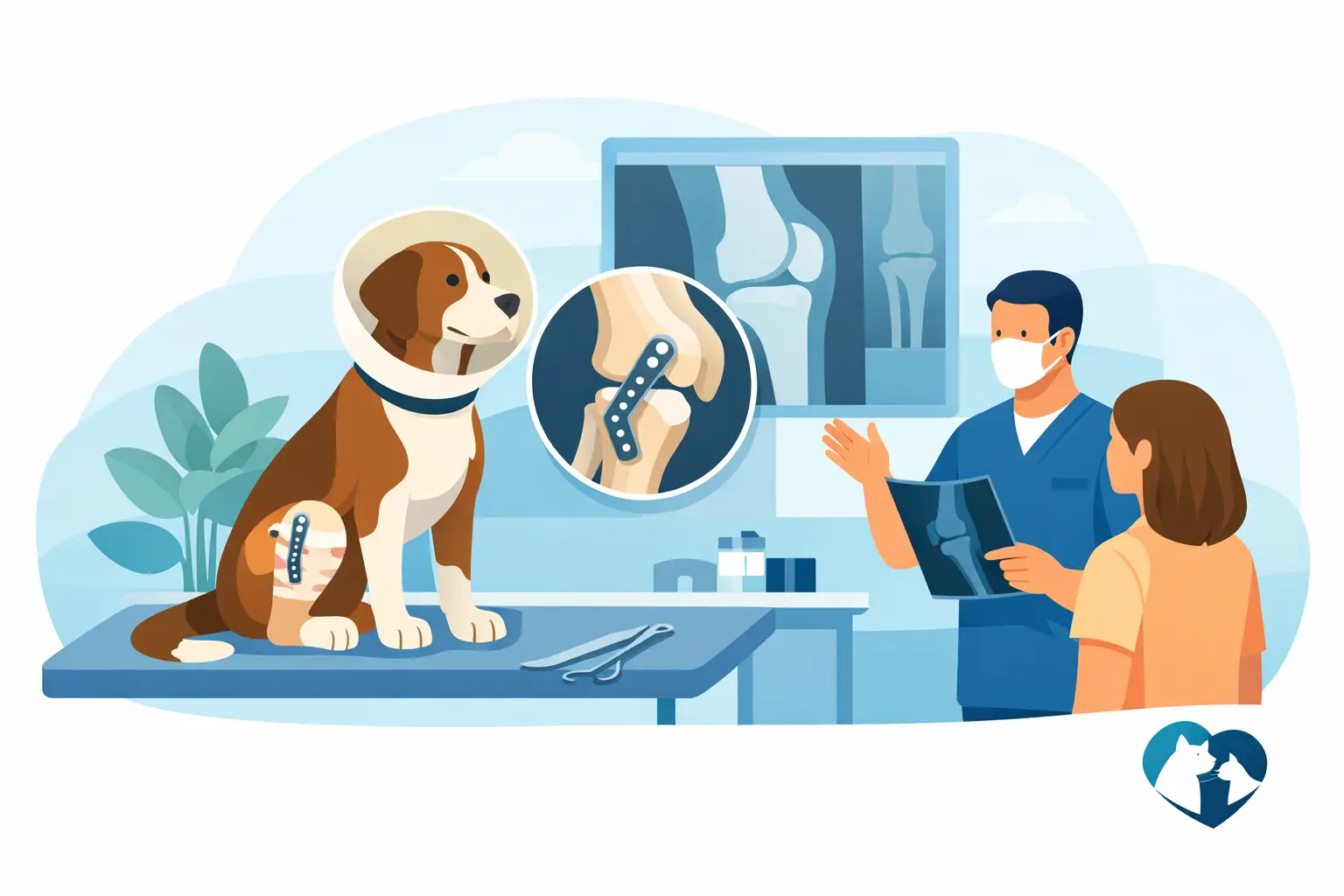
A dog who suddenly starts hopping on three legs after chasing a ball can go from playful to painful in seconds. For many families, that injury leads to a conversation they were not expecting about tplo surgery, one of the most common orthopedic procedures used to stabilize a torn cranial cruciate ligament, or CCL.
If your veterinarian has mentioned TPLO, you are probably balancing a lot at once – your dog’s pain, the cost of treatment, the logistics of recovery, and the fear of making the wrong choice. The good news is that this procedure is well established, often very effective, and designed to help many dogs return to comfortable daily movement. The right plan depends on your dog’s size, age, activity level, overall health, and how severe the knee instability is.
What is TPLO surgery?
TPLO stands for tibial plateau leveling osteotomy. That sounds technical because it is. In simple terms, the surgery changes the angle at the top of the shin bone so the knee can function more stably even after the torn ligament is no longer doing its job.
In a healthy dog knee, the cranial cruciate ligament helps prevent the shin bone from sliding forward when weight is placed on the leg. When that ligament tears, the joint becomes unstable. That instability causes pain, limping, inflammation, and over time, arthritis. TPLO surgery works by changing the mechanics of the joint rather than replacing the ligament itself.
During the procedure, a veterinary surgeon makes a curved cut in the top portion of the tibia, rotates that section to reduce the slope, and secures it with a metal plate and screws. Once the bone heals in that new position, the knee is better able to handle weight-bearing forces.
When do dogs need TPLO surgery?
Not every dog with a CCL tear needs this exact procedure, but TPLO surgery is often recommended for medium to large dogs, active dogs, and dogs with significant knee instability. It is also commonly considered when a dog’s lifestyle or body weight makes long-term conservative management less likely to succeed.
Some dogs injure the ligament in one dramatic moment. Others have a slow, degenerative tear that worsens over time. You may notice limping, stiffness after rest, trouble rising, reluctance to jump, or sitting with one leg stuck out to the side. In some cases, swelling around the knee becomes obvious.
A torn CCL does not usually heal the way a simple muscle strain might. Without enough stability, the joint continues to wear down. That is why early evaluation matters. Delaying care can mean more pain, more arthritis, and a harder recovery later.
Why TPLO is often recommended over other options
There is no one-size-fits-all knee surgery for dogs. Procedures such as lateral suture stabilization and TTA may also be appropriate in certain cases. The best choice depends on the individual dog and the surgeon’s assessment.
TPLO is popular because it tends to provide strong functional stability, especially for larger or more athletic dogs. Many dogs are able to bear some weight relatively early after surgery, and long-term comfort can be excellent when healing goes as planned.
That said, bigger is not always better. Smaller, older, or less active dogs may do well with other approaches. Some pets with advanced health issues may not be ideal surgical candidates at all. This is where a careful orthopedic exam, X-rays, and discussion of your dog’s daily life become more valuable than general advice from the internet.
What happens before the procedure
Before surgery, your dog will need a full physical exam and diagnostic imaging. X-rays help confirm the problem and assist with surgical planning. Pre-anesthetic bloodwork is also important because it helps the veterinary team evaluate organ function and anesthesia safety.
You will usually receive instructions about fasting the night before surgery and whether your dog should take any regular medications that morning. If your pet is in pain, the team may start medications before the procedure to keep discomfort under better control.
For many families, this stage is where the emotional part hits hardest. It helps to ask practical questions. How long will your dog stay at the hospital? What kind of pain control will be used? Will rehab be recommended afterward? What restrictions will be needed at home? Clear answers make the process feel much more manageable.
What recovery from TPLO surgery really looks like
Recovery is not just about the operation itself. It is about what happens over the next several weeks. Most dogs need strict activity restriction at first, even if they start acting better quickly.
In the early days, expect leash walks only for bathroom breaks, no running, no jumping, and no roughhousing with other pets. Your dog may need help getting up, especially on slick floors. A crate, exercise pen, or small recovery area is often useful. Pain medication, anti-inflammatory medication, and sometimes antibiotics may be prescribed.
Sutures or staples are typically checked or removed around two weeks after surgery. Follow-up X-rays are commonly taken several weeks later to monitor bone healing. Full recovery often takes about eight to twelve weeks, though some dogs need more time depending on age, body condition, and whether there were complications.
One of the most common mistakes owners make is assuming that less limping means the leg is fully healed. It does not. Dogs often feel better before the bone has finished healing, which means they can reinjure themselves if activity ramps up too soon.
The role of rehabilitation after TPLO surgery
Rehabilitation can make a real difference after orthopedic surgery. Controlled therapeutic exercise, guided range-of-motion work, strength building, and treatments aimed at pain relief can support a safer and smoother return to function.
Some dogs need only a basic home exercise plan. Others benefit from a structured rehab program, especially if they are overweight, older, anxious, or slow to regain strength. Underwater treadmill therapy, balance work, and gradual conditioning can help rebuild muscle while limiting joint stress.
This is one area where integrated care matters. When surgery, follow-up, and rehabilitation are coordinated, families often have an easier time navigating recovery without bouncing between disconnected providers.
Risks and complications to understand
TPLO has a strong track record, but it is still major surgery. As with any surgical procedure, there are risks. These can include infection, implant problems, delayed bone healing, swelling, persistent lameness, or complications related to anesthesia.
Some dogs also go on to injure the CCL in the opposite knee later. That does not mean the first surgery failed. It reflects the fact that ligament disease is often bilateral, even if one side becomes painful first.
Weight management, following post-op instructions carefully, and attending recheck visits all help lower the chance of setbacks. If something seems off during recovery – worsening pain, discharge from the incision, refusal to bear weight, or sudden swelling – it is best to have your dog evaluated promptly.
How much does TPLO surgery cost?
Cost matters, and most pet owners need straight answers about it. TPLO surgery is usually more expensive than simpler stabilization procedures because it requires specialized planning, implants, anesthesia, imaging, monitoring, and post-op care.
The total cost can vary based on your dog’s size, the complexity of the case, geographic area, and whether rehab and follow-up imaging are included. There is not a single universal price. What matters most is understanding what the estimate covers so you can compare options fairly.
Choosing the lowest number without looking at surgical expertise, monitoring standards, pain management, and aftercare can end up costing more if problems arise later. Affordable care is important, but so is complete care.
How to know if your dog is a good candidate
The best candidate for tplo surgery is not defined by breed alone. Surgeons usually look at body size, limb structure, activity level, degree of instability, arthritis already present in the joint, and overall health.
A young, active Labrador with a complete tear may be an ideal candidate. A very small senior dog with multiple health issues may be better served by another plan. Some dogs need the torn meniscus treated at the same time, which can affect both pain level and prognosis.
If you live in areas like Lancaster, Palmdale, or Santa Clarita and need orthopedic guidance without piecing care together from multiple clinics, working with a team that can evaluate the injury, perform advanced surgery, and support recovery under one network can reduce stress for both you and your pet.
Questions worth asking your veterinary team
Ask who will perform the surgery, what diagnostics are recommended, how pain will be managed, how often rechecks are needed, and what kind of recovery support is available. It is also reasonable to ask what outcomes are typical for dogs like yours, not just for dogs in general.
Good veterinary teams welcome those questions. You are not being difficult. You are making an informed decision for a family member who cannot speak for themselves.
For many dogs, TPLO is the step that turns a painful, unstable knee into a leg they can trust again. The process takes commitment, but with thoughtful surgical planning, careful home care, and the right follow-up, many pets get back to walking comfortably, rising more easily, and enjoying the routines that make them feel like themselves.