
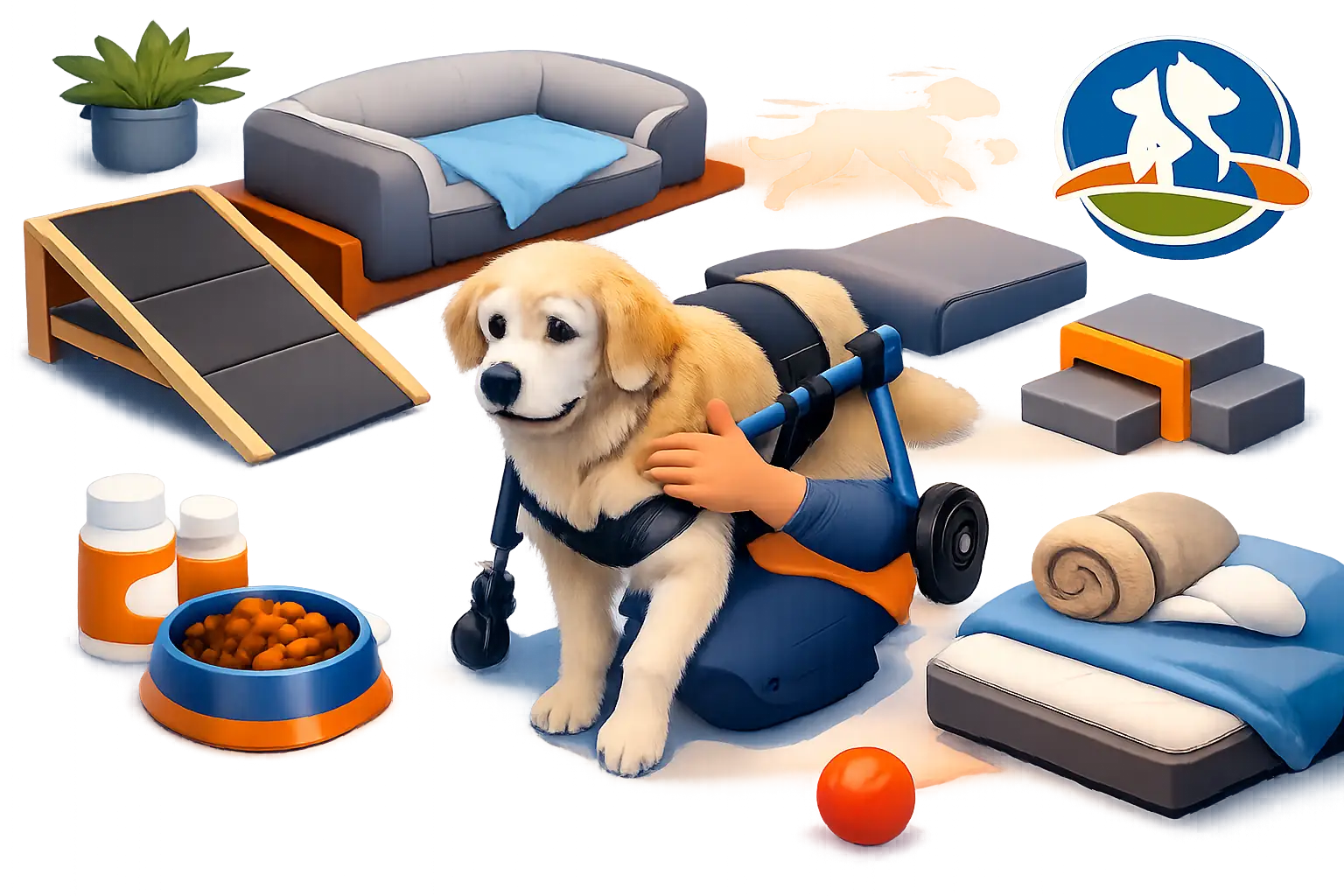
The first sign is often subtle. Your dog hesitates before jumping into the car, takes longer to stand after a nap, or slips a little on the kitchen floor. If you are wondering how to help senior dog mobility, the goal is not simply to keep your dog moving. It is to keep movement safe, comfortable, and sustainable so your dog can enjoy daily life for as long as possible.
Aging affects every dog differently. Some large breeds begin slowing down in middle age, while smaller dogs may stay active well into their senior years. Arthritis is a common reason for mobility decline, but it is not the only one. Muscle loss, neurologic changes, spinal disease, excess weight, old injuries, nail overgrowth, and even untreated pain in the feet can all change how a dog walks. That is why the best plan starts with understanding what has changed and why.
How to Help Senior Dog Mobility at Home
Home setup matters more than many pet owners realize. Senior dogs do best when the environment asks less of their joints and gives them better traction. Slippery floors can make a mildly stiff dog look much worse because every step becomes a balance challenge. Rugs, yoga mats, or traction runners in high-traffic areas can help reduce slipping and build confidence.
Beds should be easy to get into and supportive enough to cushion sore joints. A low-entry orthopedic bed is often a better choice than a soft bed your dog sinks into and struggles to leave. If your dog uses stairs to reach the yard or your bedroom, ramps or blocking access to unnecessary steps may prevent painful strain.
Small changes in routine also help. Raise food and water bowls slightly if your dog has trouble bending, but not so high that eating becomes awkward. Keep commonly used items in one area of the home so your dog does not have to make repeated trips across hard flooring. For larger dogs, a support harness can make getting up or walking outside much easier without putting unsafe pressure on the neck.
Start With a Veterinary Assessment
When mobility changes appear, an exam is the right next step. Slowing down is common in older dogs, but it should not be dismissed as normal aging without evaluation. Pain is often underrecognized because many dogs stay quiet and keep trying to function.
A veterinarian may look at gait, joint range of motion, muscle symmetry, spinal comfort, paw placement, and nail condition. In some cases, X-rays or other diagnostics are needed to separate arthritis from ligament injury, hip disease, disc problems, or neurologic conditions. Bloodwork can also matter before starting certain medications, especially in senior pets.
This step is important because treatment depends on the cause. A dog with arthritis may benefit from weight reduction, pain control, and rehab exercises. A dog with weakness from neurologic disease may need a different plan altogether. When pet owners try to manage mobility decline without a diagnosis, they can miss conditions that are treatable and time-sensitive.
Weight Control Makes a Bigger Difference Than Most People Expect
If there is one area that consistently improves comfort, it is healthy weight management. Extra pounds increase stress on joints, reduce stamina, and can make a dog less willing to move, which then leads to more muscle loss. That cycle is common in senior pets.
Helping an older dog slim down does not mean aggressive dieting. It usually means measured meals, fewer calorie-dense treats, and food choices that support satiety and joint health. In some dogs, switching from free-feeding to scheduled meals helps owners see exactly how much their pet is eating. Treats still have a place, but they should be counted as part of the daily intake.
Weight loss can be slow, and that is fine. Even modest reductions can improve mobility and make medications or rehabilitation more effective. For cost-conscious families, this is one of the most practical ways to improve comfort without adding complex equipment or procedures.
Exercise Should Be Gentle, Consistent, and Individualized
Many owners worry that exercise will worsen arthritis, but the opposite is often true when activity is appropriate. Senior dogs need movement to maintain muscle, joint function, and coordination. The key is choosing the right kind and amount.
Short, steady walks are usually better than long weekend outings. A dog who seems fine during an exciting hike may be sore for two days afterward. That delayed soreness is a sign the activity level was too high. Controlled, predictable exercise is easier on aging joints than bursts of hard play, repeated jumping, or sharp turns.
Surface matters too. Grass and packed dirt are often easier than slick flooring or hot pavement. Some dogs benefit from slower leash walks with time to warm up before increasing pace. Others need shorter sessions several times a day instead of one longer walk.
It depends on your dog’s condition. A pet with mild stiffness may do well with daily walks and light strengthening work. A dog with advanced arthritis or weakness may need a more structured plan with rehabilitation support.
Pain Management Is Often Multi-Layered
When people ask how to help senior dog mobility, they are often really asking how to help an older dog hurt less. Pain changes movement, posture, sleep, appetite, and mood. Once pain is controlled, many dogs become more engaged and active again.
Veterinary pain management may include prescription anti-inflammatory medication, other pain-relief medications, joint-support supplements, or injectable therapies. Not every option is right for every dog. Kidney function, liver health, stomach sensitivity, and other medical conditions affect what can be used safely.
This is where guidance matters. Human pain relievers should never be given unless a veterinarian specifically directs it. Many over-the-counter medications that are common in people can be dangerous or fatal for dogs.
Pain care also works best when paired with physical support. Medication alone may help, but combining it with weight control, flooring changes, and therapeutic exercise usually gives better results.
Rehabilitation Can Help Senior Dogs Stay Active Longer
Rehabilitation is not only for post-surgery pets. Older dogs with arthritis, weakness, balance problems, or chronic pain can also benefit. A rehab plan may include stretching, guided strengthening, balance work, underwater treadmill sessions, laser therapy, or other techniques designed to improve comfort and function.
The benefit of rehabilitation is that it focuses on what your dog can still do and builds from there. It can help preserve muscle mass, support safer movement, and reduce the compensation patterns that cause strain elsewhere in the body. For example, a dog protecting a painful hip may overload the front legs and shoulders. Rehab can address that whole-body pattern, not just the sore joint.
For families in Southern California who want coordinated support, Pet Care Partners connects pets with rehabilitation and broader veterinary services under one care network, which can make ongoing senior care easier to manage.
Everyday Grooming and Foot Care Matter
Mobility is not only about hips and knees. Long nails can change the angle of the foot and make standing painful. Fur growing between paw pads can reduce traction. Matted coat around the hind end or legs can affect comfort, especially in dogs already struggling to rise or squat.
Regular nail trims and paw care are simple but valuable. If your dog resists nail handling because of pain or anxiety, ask for help rather than letting the problem worsen. Clean, well-trimmed paws help many senior dogs feel more stable on their feet.
Know When Mobility Changes Need Faster Attention
Some mobility decline is gradual, but certain signs should not wait. Sudden inability to stand, dragging limbs, crying out in pain, collapse, severe limping, knuckling of the paws, or loss of bladder or bowel control can point to urgent problems. These symptoms may reflect spinal injury, neurologic disease, major pain, or other serious conditions that need prompt medical care.
Even less dramatic changes deserve attention if they persist. Reluctance to climb stairs, changes in posture, pacing at night, repeated slipping, or withdrawing from normal activities can all be signs that your dog is less comfortable than they appear.
Living longer is only part of senior care. The better goal is helping your dog stay steady, engaged, and comfortable in the routines they love most, whether that is greeting you at the door, walking to the mailbox, or settling into bed without pain.