The first few days after surgery are often the hardest on both pets and their people. Your dog may be restless but restricted. Your cat may seem quiet one hour and frustrated the next. Pet rehabilitation after orthopedic surgery gives that recovery period structure, so healing is not left to rest alone.
When a pet has a procedure for a torn ligament, fracture repair, joint injury, or another orthopedic condition, surgery is only one part of the outcome. Recovery depends on pain control, safe movement, muscle support, and careful progression back to normal activity. A well-planned rehab program helps protect the surgical repair while improving comfort and function.
Why pet rehabilitation after orthopedic surgery matters
Many pet owners understandably assume that if surgery went well, the rest is just time and crate rest. Rest does matter, especially early on, but complete inactivity for too long can create its own problems. Muscles weaken quickly. Joints become stiff. Balance changes. Some pets also start compensating in unhealthy ways, placing extra stress on the opposite leg or on the spine.
Rehabilitation helps reduce those setbacks. It gives your pet controlled, intentional activity at the right stage of healing. That may include guided exercises, range-of-motion work, muscle rebuilding, pain-relief therapies, and a home plan that fits your pet’s surgery and temperament.
There is also a practical side to this. Thoughtful rehab can lower the chance of re-injury and may shorten the time it takes for a pet to return to comfortable walking, playing, and daily routines. It is not about pushing faster than the body is ready for. It is about healing smarter.
What recovery usually looks like
Orthopedic recovery is not identical for every dog or cat. A young dog healing after cruciate ligament surgery has different needs than a senior cat recovering from fracture stabilization. The exact timeline depends on the procedure, the pet’s age, weight, body condition, and any related issues like arthritis or neurologic weakness.
Still, most recoveries move through a few broad phases. Early recovery focuses on protecting the surgical site, controlling pain and swelling, and allowing basic bathroom or litter box movement without strain. In the next phase, rehab often shifts toward gentle joint mobility, balance, and weight-bearing work. Later, the goal becomes rebuilding strength, endurance, and confidence so the pet can return to normal activity as safely as possible.
That progression matters. Too little movement can delay recovery, but too much too soon can damage healing tissues. This is one reason supervised rehab is so helpful. It keeps activity matched to the body’s actual stage of repair.
Common therapies used after orthopedic surgery
A rehabilitation plan is usually built from several tools rather than one single treatment. Some pets benefit most from hands-on therapy and simple home exercises. Others need a more structured program with multiple modalities.
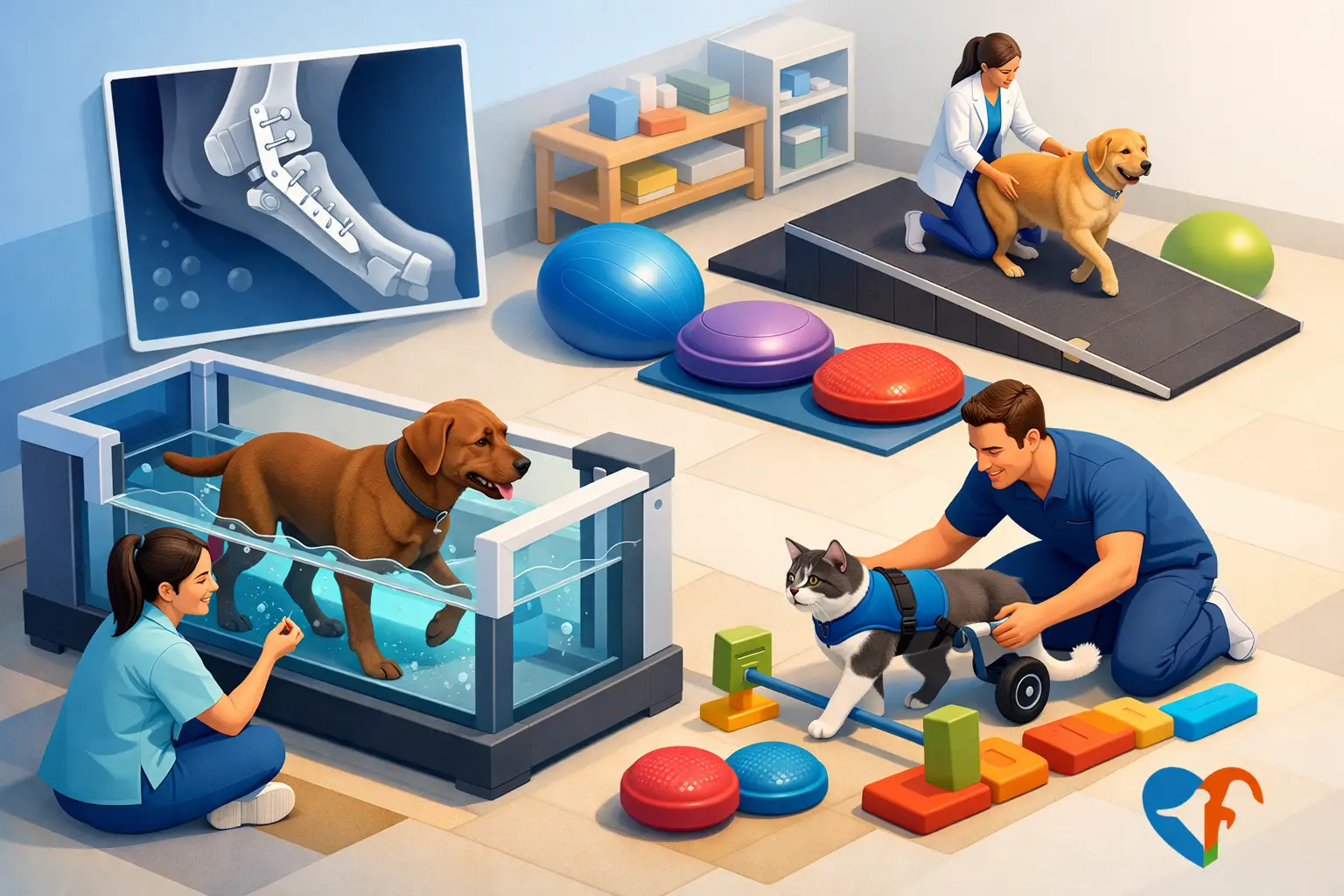
Therapeutic exercise is often the foundation. These exercises may look simple, but they are carefully chosen to improve strength, coordination, and joint use without overloading healing tissue. Shifting weight evenly, controlled sit-to-stand movements, supported walking, and balance work can all play a role.
Manual therapy may also be recommended. This can include gentle stretching, joint mobilization, and soft tissue work to reduce stiffness and improve comfort. For pets who are guarding a limb or moving unevenly, these techniques can help restore more normal movement patterns.
Cold therapy is commonly used early to manage swelling and discomfort, while heat may be used later in recovery when improving tissue flexibility becomes more important. Some rehab programs also include laser therapy or other pain-management modalities, depending on the pet’s condition and response.
Underwater treadmill therapy is another common option, especially for dogs. Water reduces the impact on joints while still allowing movement and muscle engagement. That said, it is not automatically right for every case at every stage. Some pets are not ready for it immediately, and some cats or anxious dogs do better with other methods first.
Signs your pet may need more support during rehab
Some pets move through recovery smoothly. Others need closer monitoring or adjustments along the way. If your pet stops using the affected limb, seems more painful after exercise, slips frequently, resists getting up, or regresses after initially improving, that deserves attention.
Behavior changes matter too. A pet in discomfort may become withdrawn, clingy, irritable, or reluctant to do activities they normally enjoy. Reduced appetite, disrupted sleep, or sudden hesitation on floors or steps can all be subtle signs that recovery is not as comfortable as it should be.
It can also be difficult for pet owners to know what is normal soreness and what is a warning sign. That is where regular rechecks and rehab guidance become valuable. Small issues are often easier to correct when caught early.
Pet rehabilitation after orthopedic surgery at home
Home care has a major effect on results. Even the best in-clinic rehab plan can be undermined if a pet is jumping on furniture, racing across slick floors, or missing medication doses. The goal at home is not to create a hospital environment. It is to make daily life safer and calmer while healing is underway.
Short, leash-controlled potty walks are often recommended for dogs. Cats may need temporary room restriction or a modified setup that limits climbing. Non-slip rugs, supportive bedding, and blocked access to stairs can make a meaningful difference. For larger dogs, a sling or harness may help during the early stages when balance is poor.
Home exercises should be done exactly as prescribed. More is not always better. If an exercise seems too easy, that does not mean it is time to advance it on your own. Many setbacks happen because pets appear improved before the tissue is fully healed. Enthusiasm can outpace biology.
Consistency usually matters more than intensity. A few properly timed exercises every day are often more effective than occasional long sessions. If your pet becomes tired, anxious, or sore, that feedback should guide the pace.
The emotional side of recovery
Orthopedic recovery is physical, but it is not only physical. Restricted pets often become frustrated, especially active dogs used to long walks or play. Cats may dislike confinement and express that stress in quieter ways. Owners can feel guilty enforcing limits when their pet seems bored or upset.
That emotional piece is real, and it should be part of the recovery plan. Food puzzles, calm affection, short training sessions that do not involve physical strain, and predictable routines can help pets settle during confinement. For anxious pets, even small changes in environment and handling can reduce stress.
Owners need support too. Recovery after surgery can feel long, especially if progress comes in small steps. Knowing what milestones to expect makes the process less overwhelming. So does having a team that can answer questions when something feels off.
When professional rehab makes the biggest difference
Not every pet needs the same level of rehab support, but some situations clearly benefit from professional oversight. Complex fracture repairs, bilateral orthopedic disease, revision surgeries, obesity, older pets with arthritis, and pets who were weak before surgery often need more than basic rest and recheck appointments.
Professional rehab is also helpful when a pet is not regaining normal use of the limb on schedule, or when the household needs practical help carrying out the recovery plan. For busy families, clear guidance can make the difference between guessing and feeling confident about day-to-day care.
At Pet Care Partners, rehabilitation is part of the bigger picture of recovery care, which matters when pets need coordinated follow-up after surgery. That can be especially helpful for families trying to balance quality treatment, availability, and cost.
What pet owners should ask during recovery
If your pet has had orthopedic surgery, ask what level of activity is safe right now, what changes should prompt a call, and what the next progression point will be. Ask when muscle rebuilding should begin, not just when incision healing is complete. Those are not always the same thing.
You should also ask how success will be measured. Better weight-bearing, improved joint motion, more balanced walking, and reduced pain are often better signs of progress than simple calendar time. Recovery is rarely perfectly linear. Some days are better than others.
The best rehab plans are individualized. A young athletic dog, a senior small-breed dog, and a nervous indoor cat do not recover the same way, even if they have similar procedures. Good guidance respects that.
Healing after orthopedic surgery takes patience, but it should never feel like guesswork. With the right rehabilitation plan, pets have a better chance to recover with strength, comfort, and confidence – and that gives families something just as important: peace of mind.