
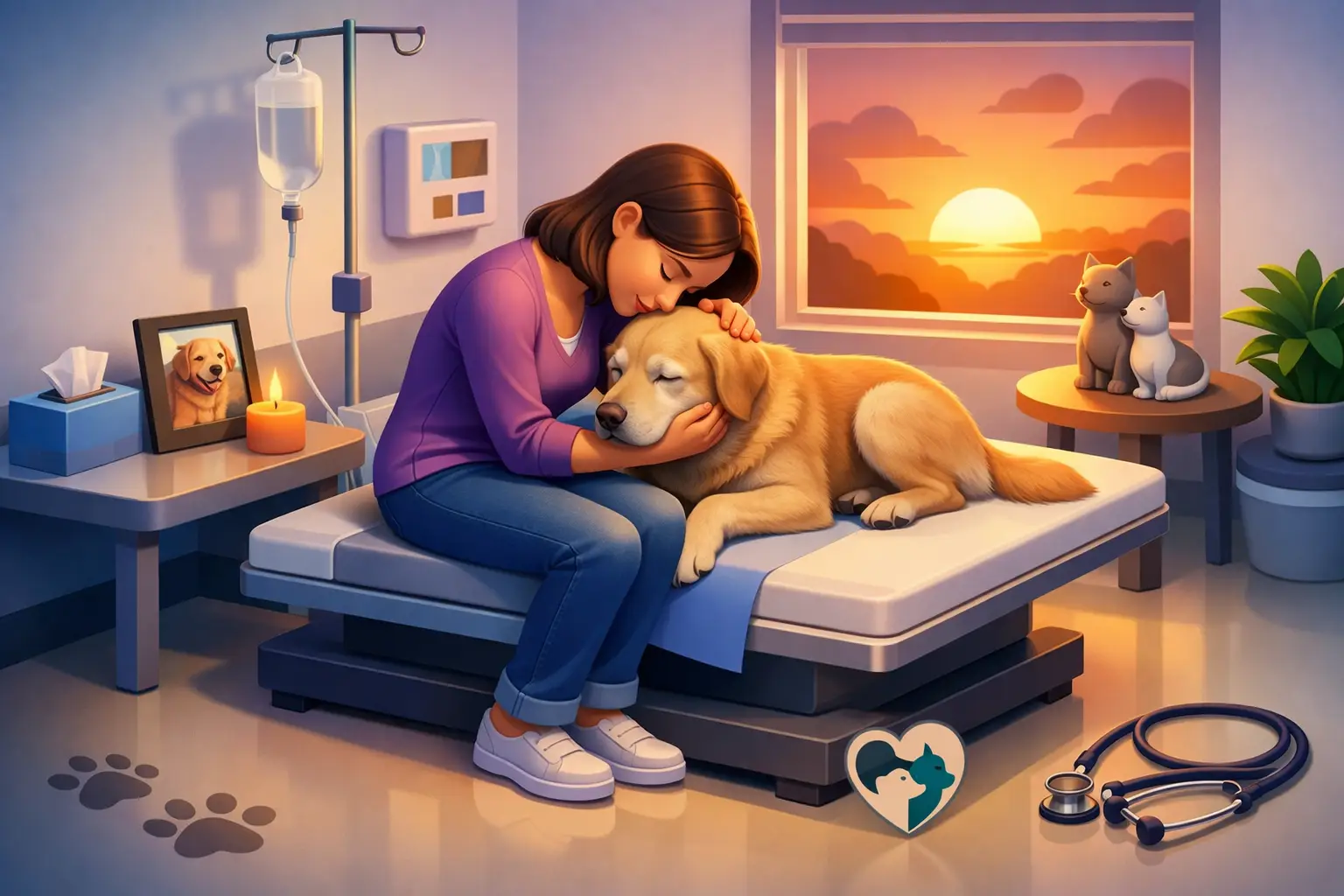
The hardest part is that there is rarely one clear moment. If you are asking, “when should I euthanize my dog,” it usually means you have already noticed changes that worry you – pain that is harder to control, days with less joy, or a decline that no longer feels temporary. That question comes from love, not failure.
For most families, this decision is not really about choosing a date on a calendar. It is about understanding whether your dog still has a comfortable, meaningful quality of life and whether treatment is helping enough to justify what your dog is going through. A veterinarian can guide you medically, but your daily observations matter just as much because you know your dog’s normal habits, personality, and comfort better than anyone.
When should I euthanize my dog if they are suffering?
The clearest reason to consider euthanasia is ongoing suffering that cannot be adequately relieved. That can mean obvious pain, but it can also look quieter than many people expect. Some dogs stop greeting family members, stop eating, hide, pace at night, struggle to stand, soil themselves because they can no longer get outside, or seem confused and distressed for much of the day.
A dog does not have to be crying out constantly to be suffering. Chronic nausea, air hunger, severe weakness, untreated anxiety from cognitive decline, and repeated falls can all create distress. In late-stage disease, families sometimes focus on one symptom and miss the overall picture. A dog with cancer, heart failure, kidney disease, advanced arthritis, or neurologic decline may have several moderate problems at once that add up to a poor quality of life.
The key question is not whether your dog has a diagnosis. It is whether your dog still experiences more comfort than discomfort, more calm than distress, and more good moments than bad ones.
Signs your dog’s quality of life may be too poor
Veterinarians often talk about quality of life because it helps shift the decision from guilt to observation. Instead of asking, “Can I let go?” try asking, “What is my dog experiencing every day?”
Pain is one part of that, but not the only part. Appetite matters. Hydration matters. Mobility matters. Breathing matters. So does dignity, especially if your dog is panicked by accidents, unable to rest comfortably, or no longer able to engage with family in ways that used to bring joy.
It can help to look at a full pattern over several days. Warning signs often include persistent refusal to eat, labored breathing, inability to stand or walk without major assistance, repeated vomiting or diarrhea, frequent accidents caused by weakness, confusion that leads to distress, and withdrawal from normal interactions. Some dogs still have flashes of themselves in between very difficult hours. Those moments are meaningful, but they should not be the only reason to keep going if most of the day is uncomfortable.
A simple journal can make this easier. Write down how your dog eats, sleeps, moves, breathes, and responds to affection each day. Families are often surprised by what they see when they stop relying on memory alone. If the bad days are becoming more frequent, or if there are no truly good days left, that is an important sign.
Good days vs bad days
This phrase may sound too simple for such a painful decision, but it is often one of the most honest tools. A good day does not have to be perfect. It may mean your dog ate willingly, rested without obvious distress, got up with manageable help, and still enjoyed your presence.
A bad day is not just a sleepy day. It is a day marked by pain, panic, weakness, nausea, respiratory struggle, or inability to do basic functions without significant suffering. If bad days are outnumbering good ones, or if recovery after each setback is weaker and shorter, euthanasia may be the kindest option.
When waiting can become unfair
Many loving owners worry about acting too soon. That fear is understandable. But there is another side to it. Waiting too long can mean a dog experiences a crisis that is painful, frightening, or impossible to manage at home.
This is especially true with conditions that can end in emergency distress, such as advanced heart disease, internal bleeding from certain tumors, severe breathing problems, uncontrolled seizures, or end-stage organ failure. In those cases, planning a peaceful goodbye may be gentler than waiting for a traumatic decline.
How veterinarians help with this decision
A veterinarian brings something essential to this conversation: a realistic medical picture. That includes whether your dog’s pain can be managed, whether treatment is likely to improve comfort, and whether the disease is expected to progress quickly.
Sometimes families are deciding between continued care and euthanasia, and the answer depends on what treatment can still accomplish. If medication adjustments, rehabilitation support, nursing care, fluid therapy, or other interventions could restore meaningful comfort, those may be worth trying. If treatment would only briefly extend life while adding stress, repeated hospitalization, or discomfort, the balance may look different.
This is why an exam matters. What looks like “old age” can sometimes be a treatable issue. On the other hand, what looks like a small change can be part of a serious decline. You should not have to make this call without support.
If you are facing this question in the Antelope Valley or nearby communities, a veterinary team that can assess pain, mobility, organ function, and overall quality of life can help you make a decision grounded in both compassion and medical clarity.
When should I euthanize my dog with cancer, arthritis, or old age?
These are some of the most common situations, and each one has its own gray areas.
With cancer, timing depends on the type of cancer, how advanced it is, whether it is causing pain or bleeding, and whether treatment is helping. Some dogs do well for months with good palliative care. Others decline suddenly. If appetite drops off, pain increases, breathing becomes difficult, or your dog no longer seems comfortable between treatments, it may be time to talk about euthanasia.
With arthritis, the issue is usually not the diagnosis itself but the loss of comfort and function despite treatment. Many senior dogs live well with arthritis when pain control, mobility support, weight management, and rehabilitation are working. But if your dog can no longer rise without severe struggle, slips repeatedly, cannot get outside, or seems painful even at rest, quality of life may be too compromised.
With old age, the challenge is that decline often happens gradually. No single problem feels large enough, but together they can become overwhelming. Hearing loss, vision loss, weakness, accidents, confusion, poor sleep, and reduced appetite can slowly erase the routines that made your dog feel secure. Age alone is not a reason for euthanasia. Suffering, fear, and loss of daily comfort are.
What to ask yourself before making the choice
Try to answer honestly, even if the answers hurt. Is my dog comfortable most of the day? Can they eat and drink with reasonable ease? Can they rest without distress? Are they still interested in family, touch, or favorite routines? Is their condition likely to improve, or are we only postponing a decline we know is coming?
Another helpful question is this: am I choosing more time for my dog, or more time for myself? There is no shame in needing time to prepare emotionally. But if your dog is suffering while you wait for certainty, that certainty may never come. Often the decision is made not when everything is gone, but when comfort and dignity can no longer be protected.
What the euthanasia process is like
Many people fear the process because they do not know what to expect. In a veterinary setting, euthanasia is intended to be peaceful and painless. Your care team will usually explain each step, discuss aftercare options, and give you time to be with your dog.
In many cases, a sedative is given first so your dog can relax. After that, the final medication allows them to pass gently. Families often say the anticipation is worse than the procedure itself. What matters most is creating as much calm as possible for your dog and for you.
If you need guidance, Pet Care Partners can help you talk through quality-of-life concerns, understand your dog’s medical condition, and decide whether it is time for a peaceful goodbye or whether supportive care still makes sense.
There is no perfect moment that leaves you feeling ready. There is only the quiet responsibility to choose with honesty, tenderness, and your dog’s comfort at the center of it all.